Mold removal is the core act of everything on this silo: physically taking colonized material and growth out of a building, under conditions that don't spread it in the process. This page covers the general residential and light-commercial service, what removal involves, how it differs from “killing” mold, and what has to travel with it for the results to last.
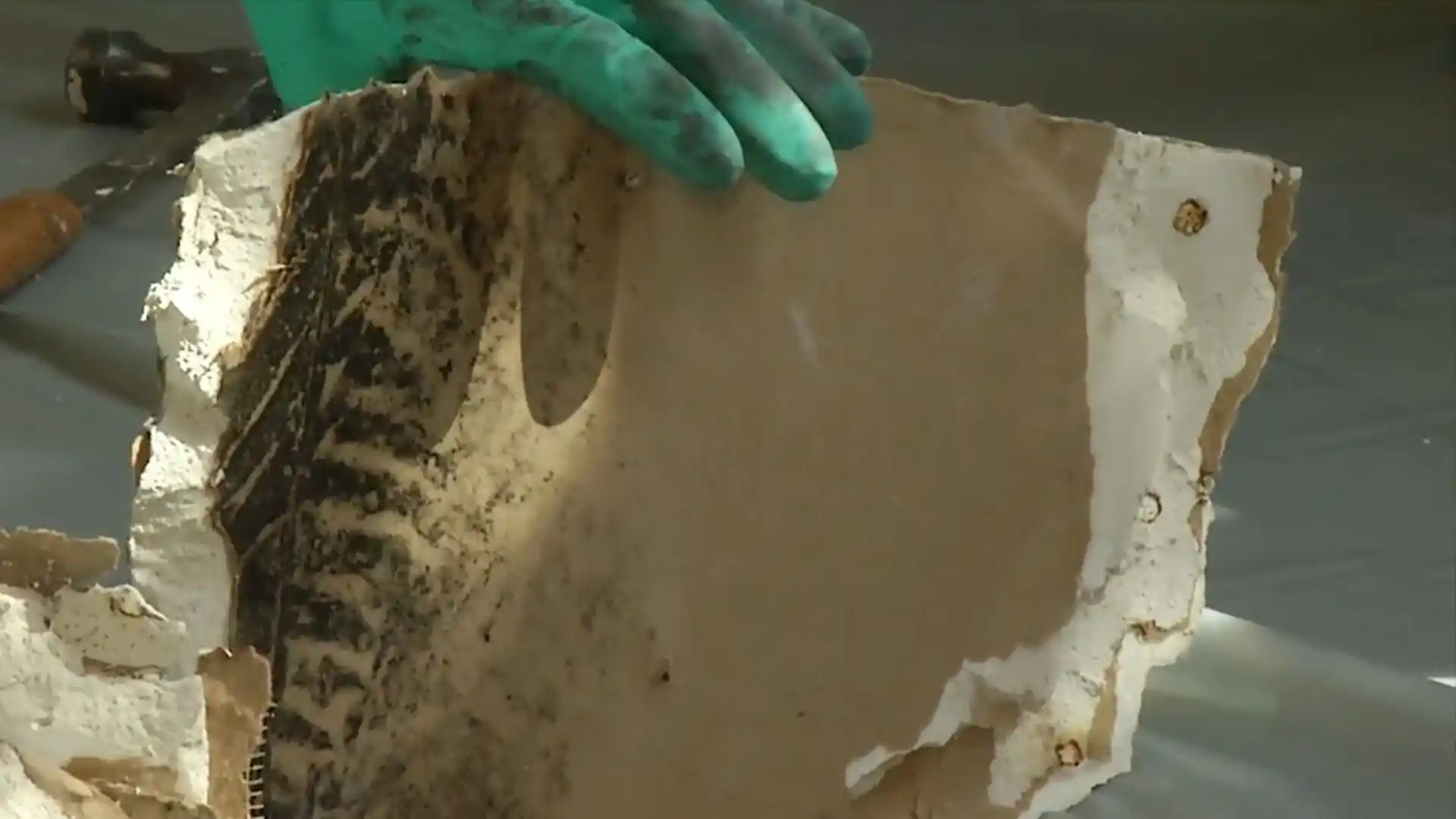
The consumer mold aisle sells the idea that mold is a chemistry problem, spray the right thing and it dies. The professional standard is physical: mold gets removed, because dead mold is nearly as problematic as living mold.
Killed colonies still hold allergens and irritants, still discolor materials, and still sit inside porous surfaces where their moisture-triggered successors will root.
Remediation therefore means colonized porous materials leave the building (bagged, inside containment), semi-porous structural surfaces get physically cleaned down to sound material, and non-porous surfaces. The only place “killing” roughly works. Get cleaned and treated as the easy last step.
This is also the honest answer to why professional removal costs more than a fogger and a weekend: the work is controlled demolition and cleaning under negative air, not application of a product.
The sequence is consistent whatever the room: assessment maps the growth and, with meters, the moisture behind it. Containment goes up, plastic isolation, negative air pressure through HEPA filtration, scaled from a zippered doorway on a small job to full-room engineering on a large one.
Removal proceeds from the containment inward: porous materials out, structural surfaces HEPA-vacuumed and cleaned, treatment applied where appropriate. The cavity dries under monitoring if moisture remains. Verification, visual for routine scopes, independent-lab sampling where scale or stakes warrant.
Clears the space, and only then does containment drop and repair begin. Homeowners who ask us to walk through remediation protocols step by step, and plenty do. Get exactly this list, with the reasoning for each stage.
The protocol is universal; the constraints aren't. Residential removal optimizes around families in place. Containment that seals the work from living space, scheduling around household rhythms, and clear guidance on what's usable during the work.
Light commercial removal, the small office, the shop, the studio, optimizes around operating hours and customer perception, borrowing the occupied-space techniques of our commercial remediation service at smaller scale: after-hours phases, discreet containment, and per-space documentation where a landlord's insurer is in the picture.
Both versions get the same close-out: documented scope, verification, and the source-correction list that determines whether we've met for the last time.
Removal addresses what grew; the moisture that grew it is a separate and non-optional scope.
Every assessment reads the growth for its moisture story, the leak-fed pattern tracking a water path versus the condensation pattern scattered across cool, still-air surfaces (the closets-and-behind-furniture signature that appears in home after home here), and every completion report names the correction: the plumbing repair, the drying our structural drying crews handle, the dehumidification target, the airflow change.
We put it in writing because the industry's quiet embarrassment is repeat removals at the same address, and the fix for that is not better removal, it's taking the water question as seriously as the mold one.
A word on quotes: mold removal pricing varies with containment scale, material removal volume, and verification level, which is why phone-only quotes in this trade are guesses wearing confidence.
Our numbers come from the assessment, and the assessment tells you the honest scope even if you take it to another contractor. Callers who want the full protocol explained line by line before committing get exactly that; informed clients make this work go better, not worse.
The IICRC S520 Standard for Professional Mold Remediation, the industry reference document our protocols follow, specifies containment levels based on the size and location of the affected area, and understanding the basic principle helps explain why even a modest mold job sometimes involves visible plastic sheeting and equipment that seems disproportionate to the job. Containment barriers, typically 6-mil polyethylene sheeting sealed at all edges, physically isolate the work area from the rest of the structure, preventing disturbed spores from spreading during removal.
Negative air pressure, maintained inside the containment using a HEPA-filtered air scrubber that exhausts outside the containment (and ideally outside the building entirely), ensures that air flows into the contained work area rather than out of it; any gap in the containment barrier draws clean air in rather than allowing contaminated air out, which is the entire safety principle behind the setup. This is genuinely different from simply closing a door, a closed door does nothing to control air pressure or filter what does escape through the inevitable small gaps every door has.
HEPA filtration, capturing 99.97 percent of particles at 0.3 microns, the size range mold spores fall within, is used both in the air scrubbers maintaining negative pressure and in the vacuums used to clean surfaces before containment comes down. Post-remediation verification, checking that surfaces are visibly clean and, where warranted, that air quality has returned to baseline, is what determines when containment is safely removed, not a fixed calendar timeline.
Routine single-area residential jobs commonly run one to three days including setup and verification; multi-room or structural jobs run longer, and any needed drying adds its own monitored days. The assessment produces an actual schedule rather than a range.
Rarely, for routine scopes, containment and negative air exist precisely so the household and the work can coexist. Large-area jobs, whole-HVAC involvement, or sensitive occupants (infants, respiratory conditions, immune compromise) can shift that answer, and we'll give it to you straight during assessment.
Not if the moisture correction happens, that's the honest condition on every warranty-shaped promise in this industry. Removal plus source correction is durable; removal alone is a countdown. Our reports make the correction explicit so the durable version is the one you get.
Contained, verified removal. And the source fix that makes it permanent.
☎ Call (240) 207-7823