Remediation ends with clean, verified, open assemblies, and a room that looks like a construction site. Mold damage repair is the second half of the job: replacing the drywall, insulation, flooring, and trim that remediation removed, and returning the space to something you'd never guess had a history. Done by the same team, the hand-off between halves disappears.
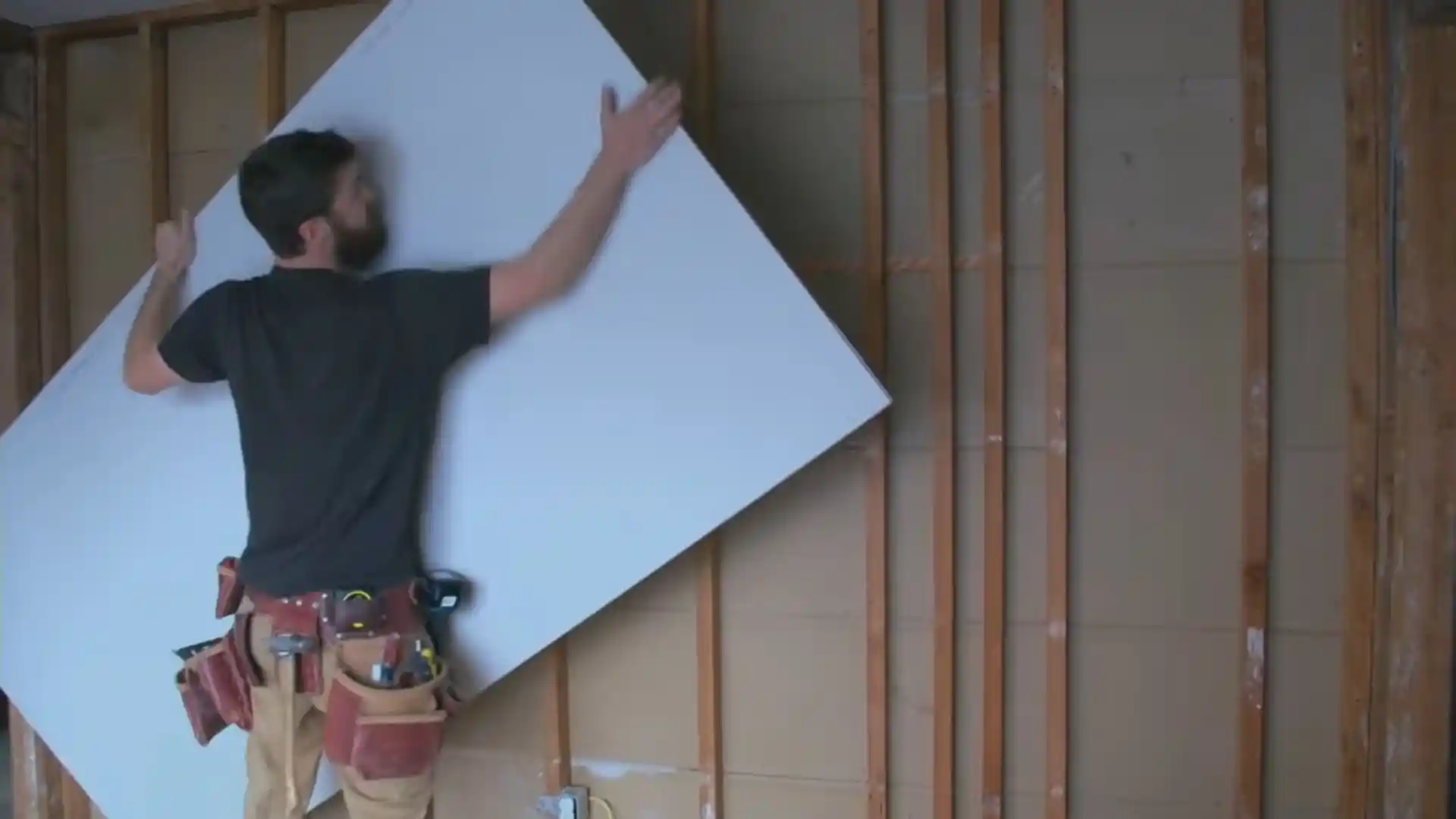
Rebuilding after mold isn't generic carpentry, the rebuild choices either respect what caused the problem or quietly reinstall its preconditions.
Moisture-resistant drywall goes where standard board fed the last colony; insulation choices in below-grade and exterior assemblies account for condensation behavior, not just R-value; flooring over slabs that have seeped gets vapor-aware underlayment or a material change; and nothing closes until the cavity behind it reads dry on a meter, full stop.
The most important step in mold repair is the one that looks like inaction: the verification pause between remediation and rebuild, where the assembly proves it's dry before it's sealed.
That pause is exactly what disappears when remediation and rebuild are different companies on different schedules, the rebuild crew arrives contracted to close walls, and closes them. Keeping both halves under one scope is how the pause survives contact with the calendar.
The usual inventory, in rebuild order: cavity insulation replaced with material suited to the assembly; new drywall hung, taped, and finished to match existing texture; primer with stain-and-odor-blocking properties where framing carried staining, then finish paint blended to the room; flooring, carpet and pad, laminate, or plank, replaced across the removed area with transitions that don't announce the patch; and trim, base, and casing matched and reinstalled.
Where remediation reached structural elements, sistered or replaced framing precedes everything, inspected and documented. The finish standard is simple to state: a visitor shouldn't be able to find the repair.
Mold claims often split oddly across coverage: many policies cap mold remediation itself while covering the resulting repair differently, and when the mold traces to a covered water loss, the whole event may run through the water claim instead, the bundled water-damage-plus-mold situation homeowners frequently find themselves quoting in two pieces.
We document remediation and repair as distinguishable scopes precisely so your adjuster can apply the right coverage to each, and where a prior water event is the true origin, our moisture findings connect that chain of causation explicitly.
A repair estimate that understands mold coverage seams saves weeks of adjuster back-and-forth; ours are written by people who've read the policies these claims land on.
Not every mold repair is a rebuilt basement. Plenty are a single opened wall in a bathroom, a closet ceiling, a two-sheet drywall patch after a contained bedroom remediation, and small scopes deserve the same material logic and the same finish standard without being inflated into projects.
We quote repairs at the size they actually are; where a homeowner comfortable with finish work wants to close their own walls after our remediation and drying verification, we'll leave the assembly documented and ready, no hard feelings.
The only version we decline is closing anyone's wall, ours or yours, over a cavity that hasn't proven itself dry, because that's not a repair, it's a scheduled reopening.
Finally, keep your remediation and repair documents together permanently, the clearance verification, moisture readings, and repair scope form a single narrative that answers every future question about the event, from an insurance renewal to a buyer's inspector years later.
We deliver them as one package for exactly that reason, and homeowners who've sold a house with a disclosed mold history will tell you that folder is worth more than the paint job, it converts a scary word on a disclosure form into a documented, resolved, and professionally verified past event.
Rebuilding after mold remediation is an opportunity to specify materials that resist the conditions that caused the original problem, and a few choices make a measurable difference. Moisture-resistant drywall, faced with fiberglass rather than the paper facing standard drywall uses, resists mold growth significantly better in areas prone to humidity or occasional moisture, bathrooms, basements, and areas near plumbing chases are the obvious candidates, though it's a modest enough cost difference to justify broader use in any previously-affected space.
Mold-resistant paint, formulated with antimicrobial additives that inhibit surface mold growth, provides an additional layer of protection though it's not a substitute for addressing the underlying moisture source; paint alone doesn't stop mold that has a genuine water problem behind it, but it does add meaningful resistance to the ambient-humidity-driven growth that affects even well-maintained spaces occasionally.
Cement board, an inherently mold-resistant material made from cement and reinforcing fibers, is standard for wet-area applications like shower surrounds and is worth considering for basement wall applications in chronically humid spaces even outside typical wet areas. For structural lumber that was affected but not replaced during remediation, borate-based wood treatments, applied after the wood is verified dry, provide long-term protection against future mold and insect activity without the toxicity concerns associated with older wood preservatives, a detail worth discussing with your contractor for any exposed framing in a rebuild scope.
As soon as the assembly verifies dry and clearance (visual or sampled, per the job) is passed, often within days of remediation finishing. The verification is the gate, not a calendar. Rushing past it is how repaired rooms become repeat customers.
Yes. Texture matching and blended repainting are standard finish scope, and flooring transitions are planned so patched areas don't telegraph. Where existing materials are discontinued, we'll show you the closest matches before committing rather than surprising you at the end.
It should be, and ours are: moisture-resistant board in the wet-risk zones, assembly-appropriate insulation, sealed and primed surfaces, and whatever cause-corrections the remediation identified. The goal isn't restoring the vulnerable original. It's rebuilding the assembly the room should have had.
Drywall to done, repair crews that finish what remediation started.
☎ Call (240) 207-7823