Mold in a commercial space is a business problem wearing a building problem's clothes. There are employees and customers in the air the mold shares, tenants and property managers with different obligations, and an operation that can't simply close for a week of remediation. Commercial mold work is the discipline of running proper containment and removal inside all of those constraints at once.
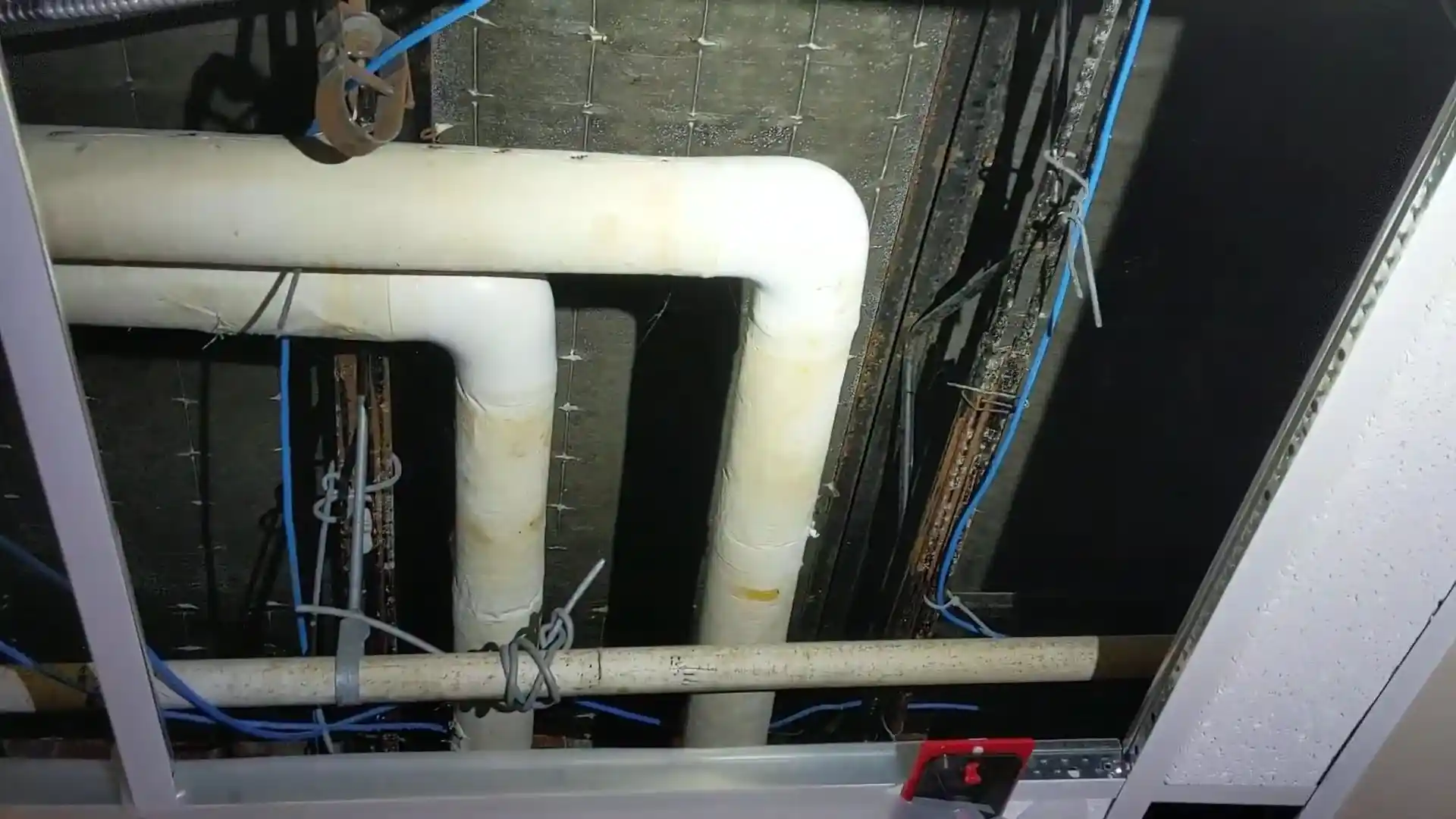
The defining challenge of commercial work is that the building rarely empties. Remediation in an operating business runs on containment engineering: sealed work zones under negative pressure so air flows into the containment and out through HEPA filtration, never from the work area into occupied space; after-hours scheduling for the noisiest and most disruptive phases; and staged zones that move through a building section by section so the operation shifts around the work rather than stopping for it.
Done right, employees two rooms from active remediation notice plastic sheeting and little else.
Communication is half the job. Occupants worry, reasonably, when containment goes up, and a short written notice explaining the work, the protections, and the schedule prevents the rumor version from writing itself. We supply that notice as standard practice.
Commercial construction has its own moisture habits. Roof leaks over drop ceilings feed growth on tile and deck that nobody sees until tiles stain or a musty smell settles into a suite. HVAC systems, larger, more complex, and more central than residential.
Grow mold at coils and drain pans and then distribute spores building-wide, which is why the HVAC inspection is early in every commercial assessment rather than an afterthought.
Condensation behind wall coverings in humid seasons, slow plumbing leaks in shared chases, and the vacancy problem, unconditioned or unmonitored suites where a small leak runs for weeks, round out the usual suspects, that last one being a live pattern in transitional corridors like the redeveloping Lakeforest area.
Commercial mold nearly always involves more than one responsible party, and the documentation has to serve all of them.
Our assessments establish and record the moisture source, because source determines responsibility more than location does: a roof leak is typically a landlord matter even when the growth is in a tenant's suite, while a tenant-installed appliance leak runs the other way.
Scopes and clearance results are issued per-space, formatted for submission under commercial policies, and the moisture findings are stated plainly enough to settle the “whose problem is this” conversation with facts rather than volume. Property managers who've been through a mold dispute tend to become our most organized clients afterward.
Commercial jobs end with verification proportionate to their stakes: post-remediation evaluation, clearance sampling through an independent lab where occupancy, liability, or lease language calls for it, and a completion package, scope, photos, moisture readings, lab results, that closes the matter durably for every party holding a copy.
Where the remediation exposed causes needing other trades (roofing, HVAC service, plumbing), those hand-offs are listed with the evidence attached.
And where the underlying event was a water loss that was never fully dried, our commercial water damage team addresses the moisture side under the same coordination, so the building gets one integrated fix instead of two overlapping vendors.
For property managers building a prevention program rather than reacting to a finding: quarterly walk-throughs of mechanical rooms and vacant suites, humidity monitoring in below-grade spaces, and a standing HVAC coil-and-pan maintenance schedule prevent the large majority of commercial mold events we see.
We're glad to help scope that program for a specific building. An hour of walkthrough now is the cheapest remediation any building ever gets, and it gives your team a documented baseline to measure future findings against.
Commercial mold situations carry liability dimensions that residential mold generally doesn't, particularly around tenant health complaints and lease obligations. Commercial leases frequently include specific mold-related clauses assigning responsibility for moisture-source issues (often landlord, if related to the building envelope or shared systems) versus tenant-caused moisture (often tenant, if related to their specific use or equipment), and reviewing your lease's exact language before a dispute arises saves considerable friction later.
OSHA doesn't currently have a specific standard regulating workplace mold exposure, but general duty clause obligations, an employer's baseline responsibility to maintain a workplace free of recognized hazards, apply to significant mold contamination, and tenant health complaints citing mold exposure are taken seriously by regulators and courts alike even without a mold-specific regulation to point to. This is part of why commercial property managers benefit from documented, proactive moisture management rather than a reactive posture that waits for complaints.
Our commercial remediation protocol follows the same IICRC S520 Standard for Professional Mold Remediation that governs residential work, but scaled to commercial containment and occupied-space requirements: engineering controls (negative air pressure, HEPA filtration) sized to larger spaces, documentation formatted for property management and legal review, and scheduling that respects business operations. For a property with recurring tenant complaints or a documented moisture history, we're glad to discuss a proactive assessment program rather than waiting for the next complaint to trigger a response.
Usually not entirely. Containment and negative-pressure protocols are designed for occupied buildings, and after-hours scheduling covers the disruptive phases. Closures, when needed, are typically zone-by-zone and short. The assessment produces a schedule you can plan operations around.
It follows the moisture source and the lease more than the mold's location. Building-envelope and structural sources generally point to the owner; tenant-caused moisture points to the tenant; leases fill the gaps. Our documented source findings are written to answer exactly this question.
Through shared HVAC, yes, which is why the system inspection is early in assessment and why affected air handlers get addressed, not just the room where growth is visible. Catching a coil-and-duct problem before it seeds other suites is the cheapest outcome available.
Occupied-building protocols, per-space documentation, and schedules built around your operation.
☎ Call (240) 207-7823