Montgomery Village · Gaithersburg · Montgomery County, MD
24/7 Dispatch · (240) 207-7823
Water DamageServicesFire DamageMold Remediation
Mold Remediation Services

Black Mold Removal In Montgomery Village, MD

“Black mold” is the phrase that turns a maintenance issue into a household emergency, and it deserves some precision. Stachybotrys chartarum, the species the phrase usually means, is a genuine reason for professional remediation: it colonizes chronically wet cellulose materials, and disturbing it carelessly spreads it. But not every dark mold is Stachybotrys, and the right response starts with knowing what you're actually looking at.
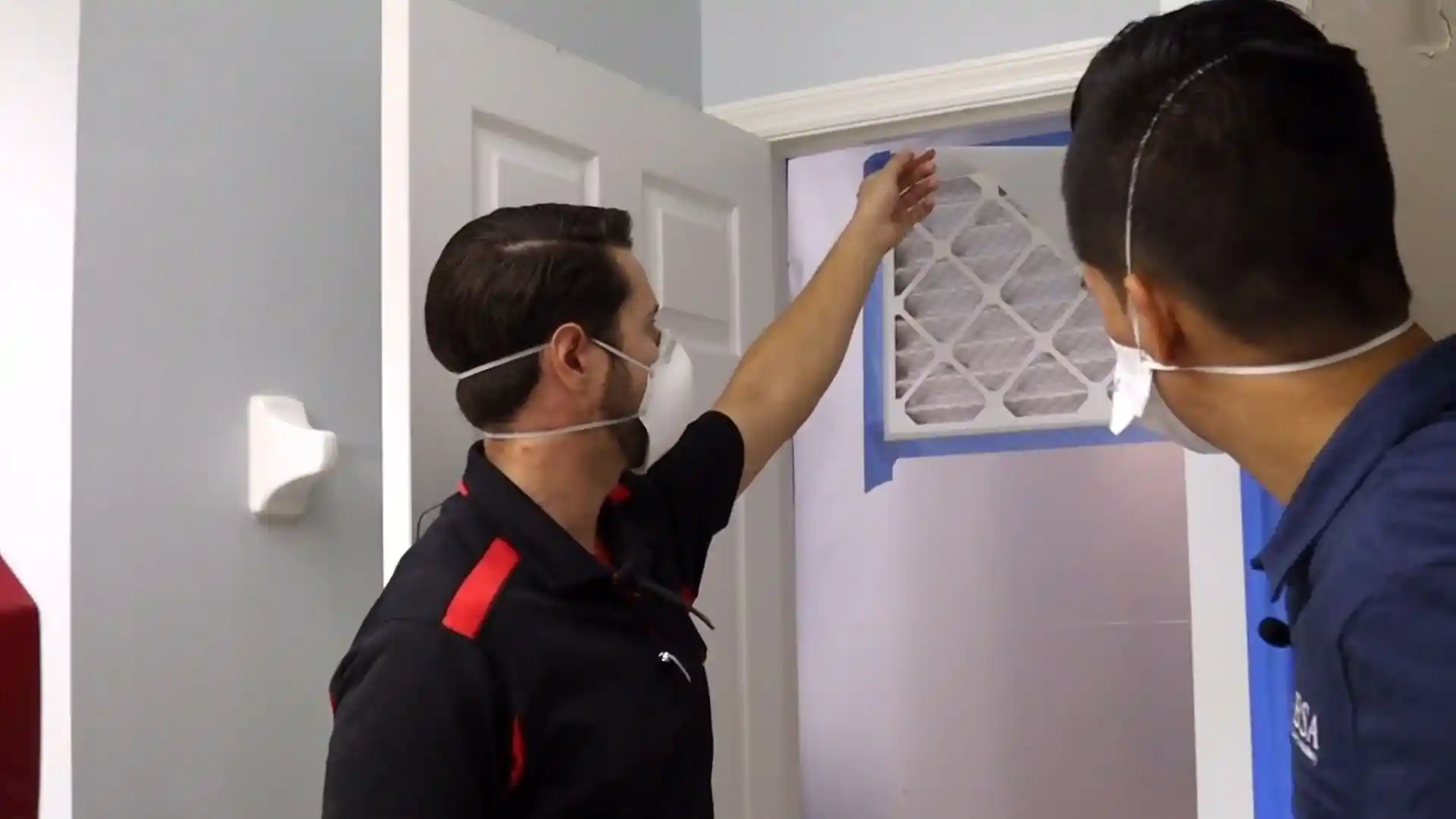
Black mold removal containment setup in Montgomery Village, MD
24/7 Emergency ResponseCrews dispatch immediately, any hour
☎ Call Now
🛡️Licensed & Insured Crews
📋Insurance & HOA Documentation
⏱️24/7 Emergency Dispatch
📍Serving Montgomery Village & Montgomery County

What Black Mold Actually Is (And Isn't)

Plenty of common molds grow dark, Cladosporium on bathroom surfaces, Aspergillus varieties on walls. And their remediation is more routine.

Stachybotrys is distinctive in its requirements: it needs cellulose (drywall paper, ceiling tile, wood fiber) and sustained saturation, typically a week or more of constant wetness. That's why finding it is diagnostic in itself. It means a long-duration moisture source, not a one-time splash.

It appears greenish-black, often slimy when the source is active, growing in patches that follow the water: along a leak path, across the flood line of a wall, in the ceiling cavity below a slow drip.

Because visual identification across species is unreliable, suspected Stachybotrys is a case where testing earns its cost, species confirmation shapes containment level, and documented results matter if health concerns or a real-estate transaction are in the picture.

The Removal Protocol

Stachybotrys removal is remediation at its most disciplined. The work area gets full containment, plastic barriers, negative air pressure with HEPA filtration exhausting outside the space, so spores disturbed by removal don't seed the rest of the house.

Affected porous materials are removed, not treated: colonized drywall, insulation, and ceiling material leave in sealed bags, because killing surface growth on a material the colony has penetrated just leaves dead and living growth inside it.

Structural wood gets cleaned, HEPA-vacuumed, and treated where colonization is superficial, or cut out where it isn't. Then the cavity dries under monitoring, and clearance verification, visual plus post-remediation sampling when warranted, closes the containment.

Every step above exists because of a failure mode we've seen from the other approach: the bleach-and-repaint job that returns within a season, having spread spores house-wide on the way.

The Source Is The Real Job

Stachybotrys's demanding moisture requirement is the tell: somewhere, water has been present continuously, a slow supply-line leak inside a wall, a chronically seeping foundation, a roof leak feeding a ceiling cavity, a shared-riser drip in one of the Village's townhome clusters that neither unit has noticed. Removal without source correction is scheduled reoccurrence. Our assessment traces the moisture with meters and inspection before removal begins, and the scope pairs the remediation with the fix: plumbing repair coordination, structural drying of the affected cavity, and where the source is a past water loss that was never properly dried, an honest accounting of what that earlier event left behind.

Health Context, Without The Panic

The internet treats black mold as uniquely lethal; the medical literature is more measured. Mold exposure, Stachybotrys included, is associated with respiratory irritation, allergic response, and asthma aggravation, with sensitivity varying enormously by person; young children, older adults, and immunocompromised or respiratory-sensitive individuals warrant more caution.

What's clear enough to act on: nobody should live with active colonization of any species, disturbance without containment measurably increases exposure, and symptoms that correlate with time in the affected space deserve both a doctor's attention and a remediation plan.

We'll treat the mold seriously without treating you to a scare campaign. The facts are sufficient motivation on their own.

If you're photographing the growth for us before your call, genuinely helpful for dispatch, shoot from a distance without touching or disturbing anything, and include one wider shot showing the room context; the location tells us as much as the mold does.

Mold Species Beyond Stachybotrys Worth Knowing About

While Stachybotrys chartarum gets the "black mold" reputation, several other species commonly found in water-damaged homes deserve mention because they factor into lab results and health conversations. Aspergillus, a genus with many species, is among the most commonly identified molds in indoor air samples and, while generally less concerning than Stachybotrys, includes some species linked to allergic bronchopulmonary aspergillosis in sensitive individuals, a reaction worth knowing about if a household member has chronic respiratory symptoms and mold has been found nearby. Penicillium, another common indoor genus, often appears as blue-green growth and, like Aspergillus, ranges from a minor allergen for most people to a genuine concern for those with compromised immune systems.

Mycotoxins, the toxic compounds some mold species (Stachybotrys prominently among them) can produce under certain conditions, are the source of much of the public concern around black mold specifically. The scientific and medical literature on mycotoxin exposure in typical residential settings is more measured than headlines suggest, but the practical takeaway holds regardless of the specific toxicology debate: no one should be living with active, undisturbed mold colonization of any species, and professional remediation remains the appropriate response.

The EPA's guidance on mold in buildings, a widely referenced resource for both homeowners and remediation professionals, emphasizes moisture control as the fundamental solution rather than species-specific treatment, a philosophy that matches our own approach: identify and correct the moisture source, then remediate the growth it produced, rather than treating species identification as the most important variable in the response.

Common Questions

Black Mold Removal FAQ

I found black mold. Do I need to leave my house?

Usually not, keep out of the affected room, don't disturb the growth, and get assessment scheduled. Relocation during work is sometimes recommended for heavily affected homes or sensitive occupants, but discovery alone rarely requires it. The don't-disturb part is the piece that matters most today.

Can I just spray it with bleach?

Please don't. Bleach on porous materials kills surface growth while the colony inside survives, the moisture in the bleach can feed regrowth, and scrubbing aerosolizes spores. On the one surface bleach works for: non-porous, like tile. The growth there was the easy part anyway.

How do I know if it's really Stachybotrys?

Visually, you don't. Several species grow dark. Sampling with lab analysis answers it definitively. Practically, the finding that matters as much as species is the moisture story: any dark mold on chronically wet cellulose gets the full protocol, because the conditions that grow Stachybotrys are the problem either way.

Related Services

You May Also Need

Mold Testing

View Service →

Mold Damage Repair

Full Service Details →

Black Mold In Your Home?

Don't disturb it, contained removal crews and same-day assessments across Montgomery Village.

☎ Call (240) 207-7823