In Montgomery Village's single-family neighborhoods, the basement usually isn't storage, it's the rec room, the guest suite, the home office, sometimes all three, which means a flooded basement here isn't just a wet floor; it's furniture, electronics, carpet, and finished walls sitting in water. Our cleanup crews handle the whole picture: getting the water out, deciding what can be saved, and drying the structure before mold makes the decision for you.
The failure modes are consistent enough that we can usually guess the cause from the first phone description. Sump-pump failure during a heavy rain is the most common, the pump dies, trips a breaker, or simply can't keep pace, and groundwater does the rest.
Water heaters let go, often in homes dating back to the Village's original construction era where the tank has quietly outlived its service life.
Washing machine supply lines burst under constant pressure. And in homes near the community's ponds and low-lying stormwater features, sustained wet weather alone can push the water table high enough to defeat an average sump system.
The cause matters because it sets the contamination category. A supply-line failure is clean water; groundwater seepage carries soil bacteria; anything involving a floor drain backing up moves the job into sewage backup cleanup territory, with a completely different sanitizing protocol.
Once extraction is done, the real work of a basement cleanup is triage. Carpet pad almost never survives a flood; carpet itself sometimes does, depending on the water category and how long it sat.
Drywall wicks water upward from the floor, so we measure the wet line with meters and remove only what's actually saturated, typically a clean horizontal cut rather than gutting whole walls. Furniture splits into save, restore, and discard piles based on material: solid wood often recovers, particleboard almost never does, upholstery depends on the water category.
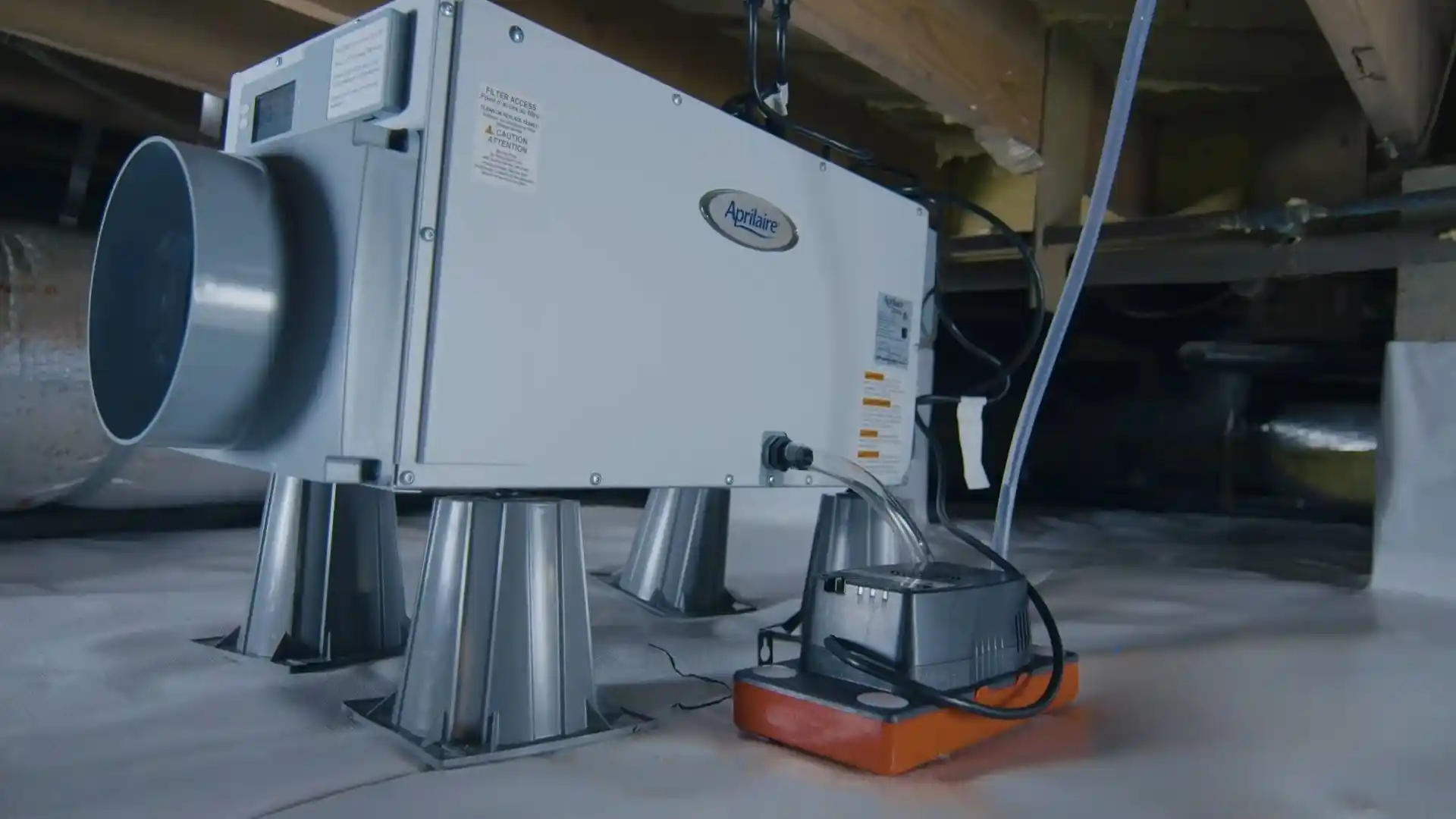
Everything that stays gets dried in place under monitored dehumidification, with daily readings until the structure hits target moisture levels. Skipping that step, or ending it a day early because things feel dry, is how a flooded basement turns into a basement mold removal job six weeks later.
We're a restoration company, not a plumbing contractor, but the completion report we leave you includes what we found about the cause, a sump discharge line frozen shut, a pump rated below what the pit needs, grading funneling roof runoff toward a window well.
Most repeat basement floods are the same failure happening twice, and the fix is usually cheaper than the second cleanup. If your basement has flooded more than once, mention it on the first call: recurring-water basements get a different assessment that looks at the water's pathway in, not just its presence.
Once a flooded basement is cleaned up, the conversation often turns to preventing a repeat, and it helps to understand the waterproofing options available, even though installing them is outside our restoration scope. Interior waterproofing systems, typically a perimeter drain (French drain) installed along the basement's interior footing and connected to a sump pump, intercept water before it reaches the living space and are generally less invasive and less expensive than exterior solutions. Exterior waterproofing, which involves excavating around the foundation to apply a membrane and improve drainage, addresses water before it reaches the foundation at all but requires significant excavation and cost.
Sump pump battery backup systems deserve special mention because they solve the single most common basement-flood scenario we see: a primary pump that fails exactly when a storm knocks out power. Battery backup and water-powered backup systems both keep a sump functioning during an outage, and either represents a meaningfully cheaper investment than the basement cleanup that follows a backup-free failure.
Vapor barriers and encapsulation, sealing basement walls and floors against ambient moisture rather than active water intrusion, address a related but distinct problem: the humidity that feeds condensation-driven mold even without a flood event. For basements with a history of dampness rather than dramatic flooding, encapsulation paired with a dehumidifier often resolves the underlying moisture problem more durably than repeated cleanup ever could. We're glad to discuss which of these options makes sense for your specific basement during any assessment visit.
Basements run on a compressed version of the standard water-damage clock. They're cooler, darker, and less ventilated than the rest of the house, which sounds protective but works the other way: still air and darkness are exactly the conditions microbial growth prefers, and a basement's limited airflow means evaporation barely helps you.
In practice, a basement flood addressed within the first day is usually a drying job; the same flood addressed after a long weekend away is frequently a drying job plus tear-out plus remediation.
If a flood happens while you're traveling, the classic sump-failure-during-vacation scenario, call from wherever you are; starting extraction before you're home beats waiting, and a neighbor with a key can meet the crew.
And a word on documentation while you wait for the crew: photograph the water line against a fixed reference, a stair riser, an outlet plate, before anything is moved or pumped. That single image anchors depth for the entire claim, and it's the one piece of evidence that can't be recreated after extraction starts.
Pad, almost never. It acts as a sponge and can't be sanitized in place. Carpet itself can often be extracted, cleaned, and dried if the water was clean-category and removal started within about a day. Groundwater or drain-backup floods usually mean the carpet goes too.
Typically three to five days of monitored dehumidification after extraction, longer if water stood for days before cleanup began or if the basement is heavily finished. The equipment stays until moisture meters, not touch or smell. Say the structure is at target.
No, but it means the clock has run further than ideal. A musty odor within a few days usually signals microbial activity beginning in wet materials. Cleanup can still prevent a full mold problem, but the scope may now include removing materials that could have been dried if addressed immediately.
Extraction, triage, and drying crews dispatch around the clock across Montgomery Village.
☎ Call (240) 207-7823