Some basement water arrives as a flood; more of it arrives as a slow, stubborn intrusion, seepage along a wall, a wet corner that keeps coming back, a sump pit that can't stay ahead of the water table. Basement water removal is the service for both: getting the water out and understanding the pathway it used, because in this community's geography, the pathway usually explains everything.
Montgomery Village was designed as a planned community with ponds and lake features woven through it, and the same low-lying stormwater geography that makes the Village green also keeps its water table busy.
Homes near those features, and homes at the bottom of the Village's rolling grade changes, deal with elevated groundwater during wet stretches, and the basement is where that pressure expresses itself. Hydrostatic pressure pushes water through cove joints where floor meets wall, through hairline foundation cracks, and up through the slab itself.
That's why the same basements tend to call twice. Removal without understanding the pathway treats the symptom; our assessment maps where the water is entering and what's driving it, so the report you're left with supports a real fix, whether that's a sump upgrade, discharge rerouting, or exterior grading work by the appropriate contractor.
The Village's climate runs humid summers into genuine freeze-thaw winters, and both ends of that cycle generate basement water. Summer brings the saturated-ground scenario, long wet periods that keep sump pumps cycling until one fails from wear or a tripped breaker.
Winter brings a sneakier failure: the sump discharge line freezes solid at its exterior exit, the pump runs against a blocked line until it burns out or the pit simply overflows, and the homeowner finds water without ever hearing a problem.
If your pump is original to the house or you can't remember testing it, the pre-storm five-minute check, lift the float, listen for the pump, confirm discharge outside, prevents a meaningful share of the calls we take.
When prevention hasn't happened, extraction is the first hour of our visit and monitored drying is the rest; a slab and cove joint that seeped for days holds far more moisture than the puddle suggests, and structural drying is what keeps a seepage event from becoming a finished-basement teardown.
Seepage rarely triggers the alarm a burst pipe does, and that's exactly its danger: a chronically damp basement corner quietly saturates framing, wicks into drywall, and builds the humidity that condensation-driven mold loves.
If you've noticed efflorescence (white mineral bloom) on basement walls, a persistent musty smell, or paint bubbling near the floor line, water has been moving through that wall long enough to leave evidence.
Those signs justify an assessment even without standing water. And if microbial growth has already started, our basement mold removal crew handles that side of the job in the same coordinated visit.
Basement seepage that has nothing to do with a storm or a burst pipe usually traces back to hydrostatic pressure, the force groundwater exerts against a foundation when the surrounding soil becomes saturated. Water always moves toward lower pressure, and a basement interior, being empty space, represents the lowest-pressure point available, which is why water finds its way through hairline foundation cracks, cove joints, and even seemingly solid poured concrete when the pressure differential is great enough. Understanding this physics explains why some basements seep reliably every spring while others, built on better-draining soil or with better site grading, never have the problem at all.
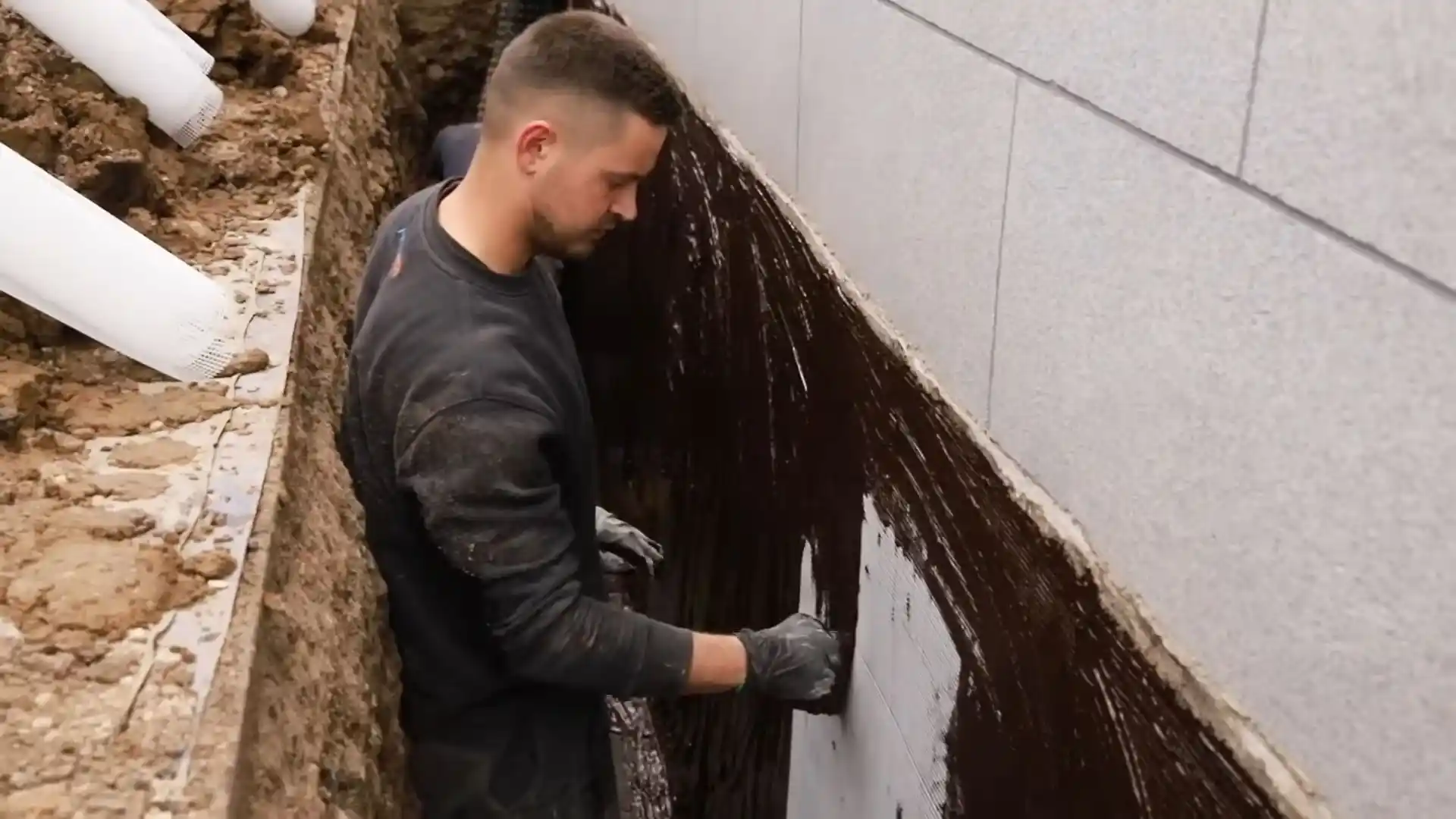
Foundation crack repair addresses one entry pathway directly. Epoxy and polyurethane injection, methods that fill a crack from the inside and create a flexible, water-resistant seal, are common fixes for hairline foundation cracks that are actively seeping, though larger structural cracks warrant a structural engineer's evaluation before any sealing work.
Dehumidification systems, sized appropriately to a basement's square footage and run continuously during humid months, address the ambient moisture that hydrostatic seepage often brings with it even after active water entry stops. A basement maintained at 45 to 50 percent relative humidity resists mold growth far more effectively than one left to fluctuate with outdoor conditions, and continuous dehumidification is frequently the single most cost-effective intervention available for a basement with a chronic, low-grade moisture problem rather than dramatic flooding.
Basements usually telegraph water problems before they have one worth a crew. Efflorescence, the chalky white bloom on block or poured walls, is dissolved minerals left behind by water moving through the wall; it means moisture transit, present or past.
Paint bubbling or flaking at the base of walls means the same. A sump pit that runs noticeably more than it used to is reporting a change in the water table or a failing check valve. Musty odor that comes and goes with rain is humidity cycling with groundwater.
Any one of these justifies attention; two or more mean the basement is actively managing water and winning by less each season. A dry-day assessment with a moisture meter costs little and turns “probably fine” into an actual answer.
A recurring wet spot almost always means a fixed entry pathway, a cove-joint gap, a foundation crack, or grading that concentrates runoff at that corner, being activated every time the ground saturates. Removing the water addresses the event; identifying the pathway during assessment is what points to a permanent fix.
Usually not under standard policies. Gradual seepage and groundwater intrusion are typically excluded, unlike sudden events such as a burst pipe or a covered sump failure (with the right endorsement). It's worth checking whether your policy carries a water-backup/sump-failure endorsement; many in this area do and many homeowners don't know either way.
If it reached finished materials or has been recurring, yes. Concrete and framing hold water invisibly, and small repeated wettings build the same mold conditions as one large flood. Meter readings during assessment give a definitive answer rather than a guess.
From sump failures to stubborn seepage, extraction and drying crews on call day and night.
☎ Call (240) 207-7823