Every bathroom grows a little mold eventually, it's the one room engineered to be wet daily. The skill is telling routine surface growth from the kind that signals something behind the wall. One is a cleaning-and-ventilation conversation; the other is a leak wearing a disguise. We handle both, and more importantly, we tell you honestly which one you have.
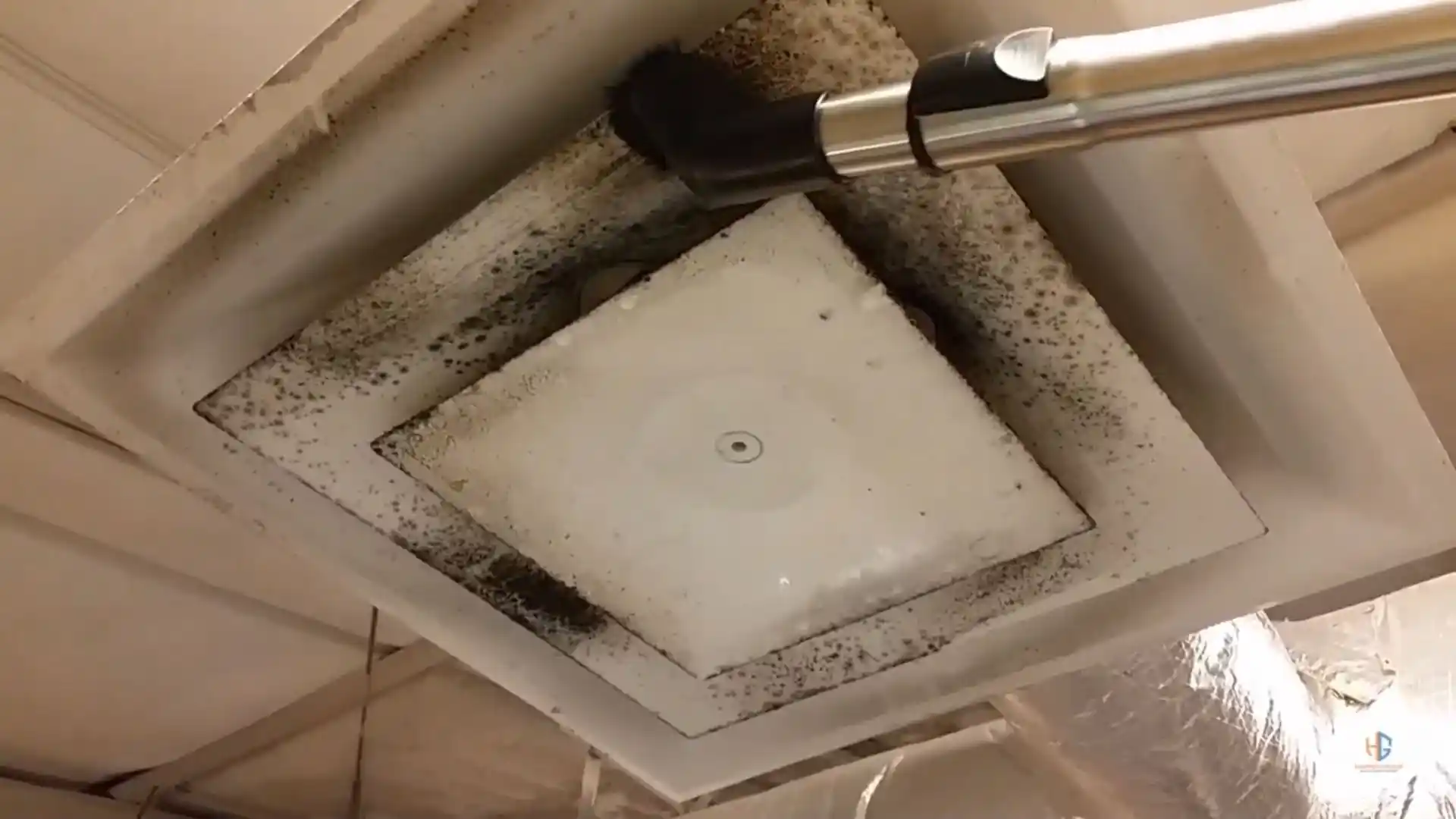
Grout lines, caulk beads, shower corners, the ceiling above the shower, growth in these spots feeds on daily humidity plus soap residue, and it's fundamentally a maintenance condition. Small areas on non-porous surfaces are legitimately DIY territory.
Where a professional visit earns its cost even for surface growth: recurring growth that returns within weeks of every cleaning (the ventilation conversation below), colonized caulk and grout that need replacement rather than scrubbing, growth inside silicone doesn't clean out, ever, and ceiling growth spreading beyond the shower zone, which starts blurring into the humidity problems of the room as a whole.
What we do for a surface-level job: remediate the growth, strip and re-caulk colonized beads with mold-resistant silicone, treat and reseal grout where it's recoverable or flag it for regrouting where it isn't, and diagnose why the room grows mold faster than it should.
Certain signs mean the growth isn't the story. The moisture behind it is.
Mold appearing on the wall outside the shower enclosure, or on the ceiling below an upstairs bath; paint bubbling or drywall softening near fixtures; a musty smell stronger than the visible growth explains; flooring lifting at the toilet or tub; mold returning to one specific spot no matter the cleaning.
Each points to water inside the assembly, a failed wax ring, a tub drain connection, a supply drip in the wall, shower pan or enclosure leakage, feeding growth from the wet side where no surface cleaning reaches.
These are the bathroom cases that connect to our water side: the moisture gets traced with meters and inspection, the source gets fixed, the assembly gets opened to actual colonization extent, dried, remediated, and rebuilt.
The upstairs-bath-to-ceiling version of this story is common enough locally that our ceiling water damage repair page is largely about it.
Chronic bathroom mold is usually a ventilation verdict. The standard questions: Is there an exhaust fan at all? (Some homes from the Village's original construction era rely on a window nobody opens in January.) Does it move real air, the toilet-paper test against the grille answers instantly.
Does it run long enough, humidity clears in the twenty minutes after a shower, not the two minutes the fan usually gets; a timer or humidity-sensing switch is the cheapest mold prevention in the whole house.
And does it exhaust outside, because a fan venting into the attic just relocates this page's problem to our attic mold removal page. Fix ventilation and most bathrooms stop being mold factories on their own.
Where bathroom remediation opens walls or replaces finishes, the rebuild is the chance to spec the room for the moisture it lives with: cement board or moisture-rated backer in wet zones instead of paper-faced drywall; mold-resistant board elsewhere in the room; silicone over latex caulk at every wet joint; semi-gloss or bathroom-rated paint that sheds condensation instead of absorbing it; and sealed grout on a maintenance schedule measured in years, not decades.
None of these are premium exotica, they're modest material upgrades that decide whether the bathroom's next decade repeats its last one. Our repair scopes default to them, and we'll tell you which ones matter most for your specific room.
Bathroom exhaust fans are rated by CFM (cubic feet per minute), and undersized fans are a common, invisible cause of chronic bathroom mold that no amount of post-remediation cleaning fully resolves. A general guideline used by HVAC professionals is roughly one CFM per square foot of bathroom floor area as a minimum, with larger bathrooms or those with separate toilet enclosures often needing more; if your bathroom has never had its fan's CFM rating checked against its size, that's worth a conversation with an HVAC contractor, especially if mold keeps returning despite good cleaning habits.
Grout sealing, reapplied every one to two years depending on shower usage, prevents water from penetrating through grout lines into the substrate behind tile, where mold can establish itself completely out of sight until it eventually shows through the visible surface. Silicone caulk at all wet-area transitions, tub-to-tile, tile-to-floor, around fixtures, should be inspected annually for cracking or separation and replaced proactively rather than waiting for visible failure, since a compromised caulk joint is an invisible water pathway until the damage behind it becomes significant.
Tile regrouting, warranted when grout has become porous, cracked, or discolored beyond what cleaning addresses, is a reasonable investment for any bathroom with a mold history, since fresh, properly sealed grout removes one of the most common hidden moisture pathways in the entire room. None of these are remediation steps, they're prevention steps, but they're the ones that determine whether a remediated bathroom stays that way.
Recurring ceiling growth is almost always the humidity-and-ventilation story: shower moisture rising, condensing on the coolest surface, and feeding growth faster than cleanings remove it. Verify the fan actually moves air and runs twenty minutes post-shower. And if the ceiling is below an upstairs bathroom, rule out a leak first.
Routine surface growth in a cleaned-and-ventilated bathroom is more maintenance nuisance than health event for most people, though sensitive individuals react to less. The health-relevant version is hidden growth in wall cavities, larger, undisturbed, and connected to your air, which is exactly the kind the warning signs above exist to catch.
If it's a straightforward tub or shower bead and you're comfortable with the work, DIY re-caulking with mold-resistant silicone is reasonable. Call us when the growth extends past caulk into grout or walls, when removal reveals soft or discolored material behind, or when the same bead recolonizes quickly. Each suggests the problem is deeper than the bead.
Honest diagnosis first, surface fix or hidden-leak remediation, we'll tell you which.
☎ Call (240) 207-7823