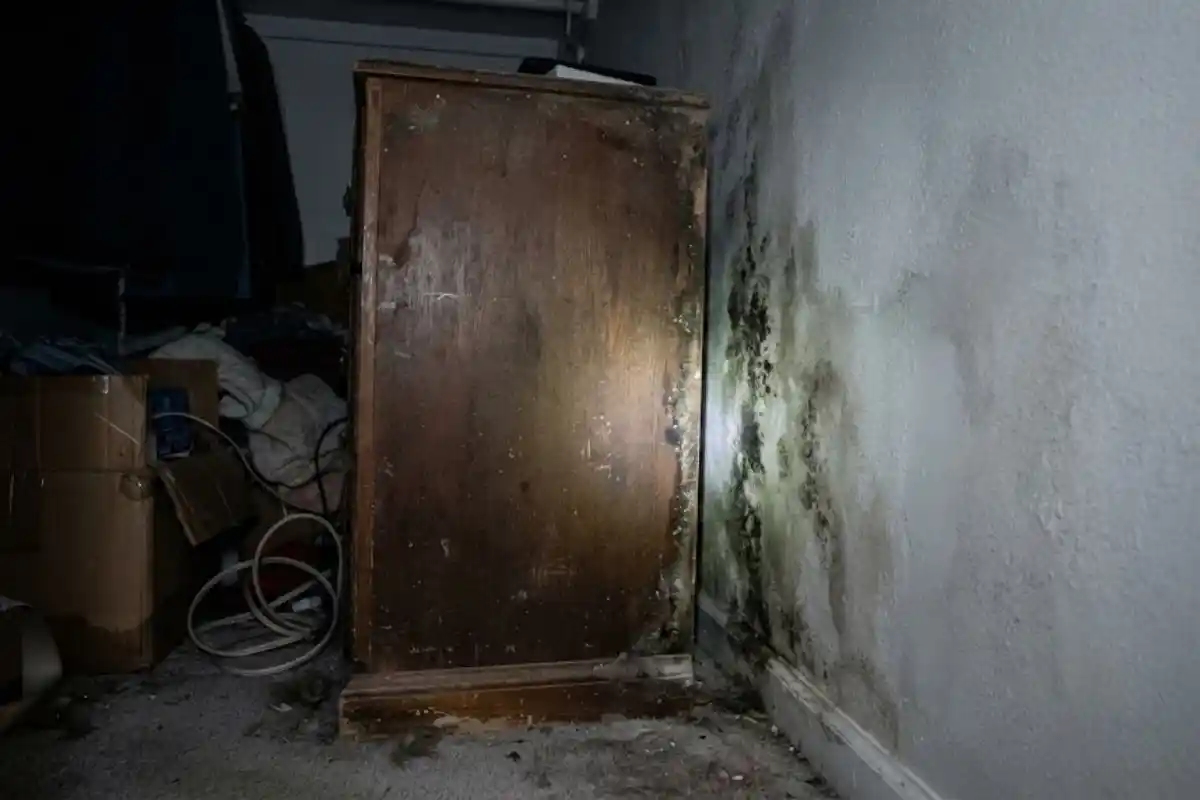
A musty smell with no visible source is one of the most common reasons people call us, and one of the most reasonable, because the smell is real information even when your eyes have nothing to confirm it.
Odor precedes visible growth almost every time, which means a musty house without a visible spot isn't a false alarm; it's an early warning that the visible stage hasn't arrived yet.
Why You Smell It Before You See It
The musty odor associated with mold comes from microbial volatile organic compounds (MVOCs), gases released as mold metabolizes the material it's growing on.
Production of these compounds starts early in colonization, often before the colony has grown dense enough to be visible as discoloration or fuzz.
That's why the smell-first, see-later sequence is the norm rather than the exception: by the time growth is visible, it has typically been active for one to three weeks, and the smell has usually been present for some of that time already. Trust the nose; it's picking up real chemistry, not imagination.
Where Hidden Mold Actually Hides
Odor without visible growth means the growth is somewhere air reaches but eyes don't.
The reliable hiding places, in the order our inspections find them: inside wall cavities, especially around plumbing chases and exterior walls where condensation or a slow leak has been active; under flooring, particularly near past water events or bathroom/kitchen wet zones; inside HVAC ductwork, where growth on duct interior surfaces or at the coil gets distributed house-wide every time the system runs; behind furniture pushed against exterior walls, where still air and a slightly cooler surface create a condensation microclimate; inside closets, especially on shared or exterior walls, for the same still-air reason; above ceilings, where a slow roof or plumbing leak has been active without ever producing a visible ceiling stain; and in crawlspaces, where ground moisture and minimal airflow create ideal growing conditions completely out of sight and often out of mind.
The Sniff Test, Refined
Before scheduling a professional visit, a few minutes of directed investigation often narrows the search meaningfully. Walk the house room by room with the HVAC off, noting where the smell strengthens, proximity usually tracks intensity.
Check basements and closets specifically, since they're disproportionately represented in our findings. Smell near return air vents; if the system itself smells musty when the blower's just kicked on, the ductwork or coil is a strong suspect.
And note whether the smell correlates with weather, stronger after rain suggests an active leak somewhere in the building envelope; stronger in humid weather generally suggests a condensation-driven source rather than a specific leak.
When To Call, And What The Visit Involves
A musty smell with no visible source is exactly the scenario our mold inspection service exists for. It's moisture-led detective work rather than a cleaning appointment.
The visit typically includes a systematic room-by-room assessment following the hiding places above, moisture metering at suspect locations (walls, floors, ceiling cavities), and often a look inside the HVAC system if ductwork is implicated by the odor pattern.
Where the search needs narrowing further, air sampling can help, elevated spore counts in one zone versus another can point the physical search in the right direction, though sampling is a complement to inspection, not a replacement for it.
The outcome is one of two honest findings: growth located, with a documented scope and moisture source identified, which flows into remediation if you proceed, or no growth found and readings recorded as normal, which is valuable in its own right for peace of mind, a real-estate transaction, or ruling mold out of a broader investigation into symptoms or allergies.
Either way, you leave the smell with an actual answer instead of a lingering question every time you walk into that room.
A Word On Masking It Instead
The consumer instinct, air fresheners, odor-eliminating sprays, a new HVAC filter, treats the symptom and leaves the cause exactly where it was, actively growing. Masking a musty smell doesn't slow the mold underneath it, and in our experience it mostly delays discovery until the growth has matured further and the eventual remediation scope is larger.
If the smell has been there more than a few weeks despite normal cleaning and ventilation, that's the threshold where an inspection earns its cost. The search is faster, cheaper, and more conclusive than continuing to guess at candles.
A Reasonable Timeline For Acting
Not every musty whiff needs an emergency call, a smell that appears briefly after closing up a room for a rainy week and clears with normal ventilation is often just humidity doing what humidity does.
The threshold worth acting on: a smell that persists more than two to three weeks despite normal airing and cleaning, a smell that's strengthening rather than stable, or a smell paired with any allergy or respiratory symptoms that improve when you're away from the house.
Any of those crosses from “monitor it” to “get it looked at,” and the inspection itself is a modest, bounded cost compared to the alternative of living with an unanswered question, or letting the growth behind it mature for another month while you decide.
An inspection visit is typically a single appointment, and either outcome, growth found and scoped, or a documented clean bill, is more useful than another month of wondering, and both outcomes give you something concrete to act on or file away with confidence, which is considerably more than the smell alone was ever going to tell you on its own, and considerably cheaper than discovering the answer by living with it for another season.
Musty odor is one of the few home-maintenance signals that's genuinely worth trusting over your own eyes, by the time the visible confirmation arrives, the growth has already had its head start, and the smell was simply the earliest honest report available.
The Short Version
Trust the smell, narrow the search with the room-by-room walk above, and get an inspection if it persists past a few weeks. That's the whole method, and it works whether the house is a Whetstone townhome or a Goshen colonial.
Dealing with this right now in the Montgomery Village area? Our dispatch line is answered 24/7: (240) 207-7823