When floodwater gets into a Montgomery Village home, the clock matters more than almost anything else. Whether the water came in through a window well during a downpour, backed up from an overwhelmed storm drain, or rose through the slab near one of the Village's ponds, our crews extract it, sanitize what it touched, and dry the structure down to verified moisture targets, with every step documented for your insurance claim.
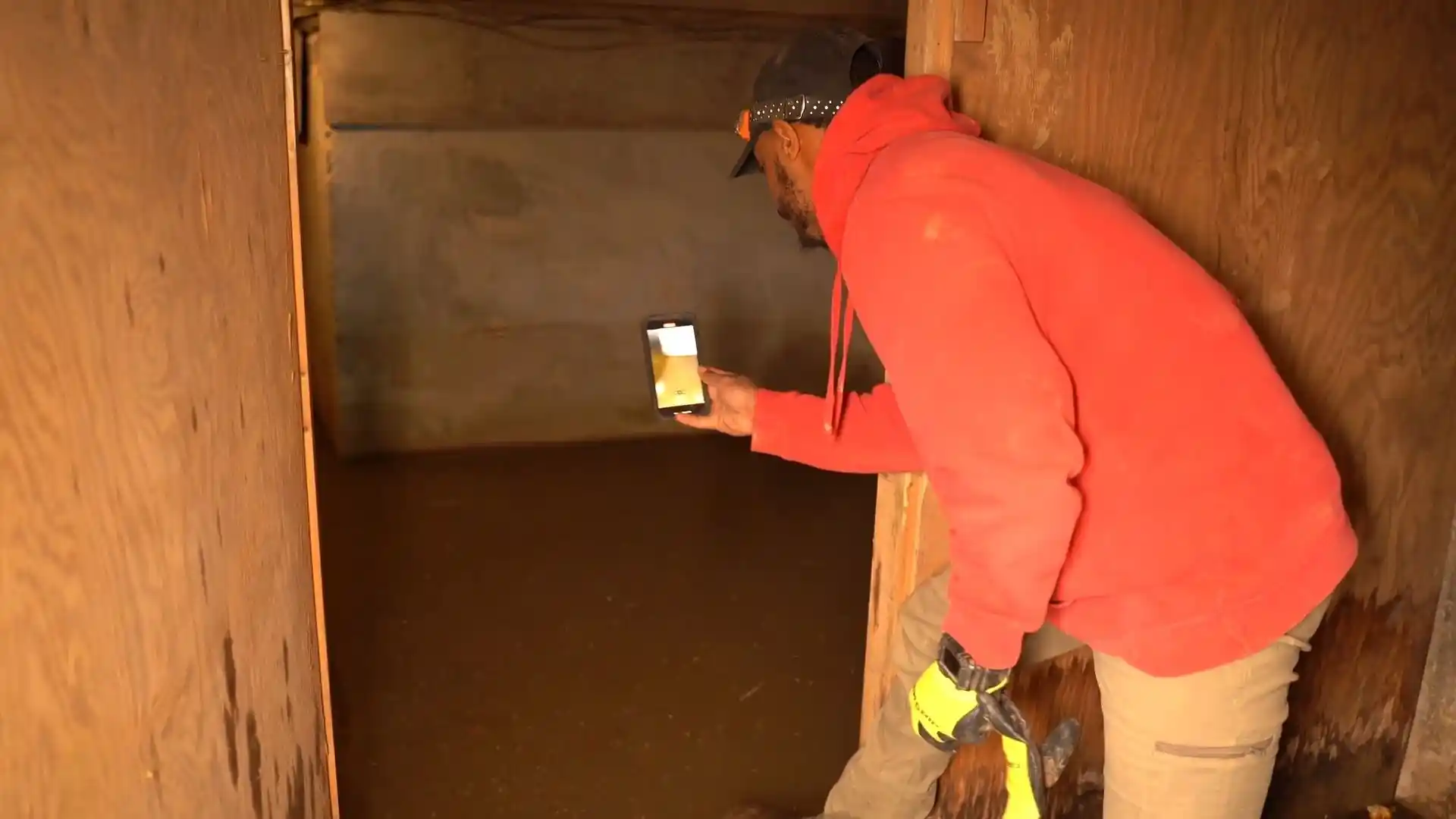
Montgomery County has a documented, recurring flash-flood pattern that county emergency officials themselves describe as ongoing rather than isolated. A 2021 flooding event in Rockville prompted the county to expand its early-warning systems, and in July 2025 a single flash flood generated more than 100 rescue calls in a two-hour window across the county.
Those are regional events rather than incidents confirmed at Montgomery Village addresses, but they describe exactly the kind of short, intense rainfall that overwhelms yards, window wells, and storm drains here in the Village too.
The Village's own geography adds a wrinkle: the planned community was built around a network of ponds and lake features, and properties near those low-lying areas can see elevated groundwater and stormwater runoff during heavy rain.
If your home sits near Lake Marion or one of the other water features, floodwater doesn't need a dramatic storm to find its way into a basement. A saturated week of rain can be enough. Our basement water removal service exists largely because of properties in exactly this situation.
Flood restoration is a different job from a burst-pipe cleanup because floodwater is contaminated by definition. It has crossed soil, pavement, and often storm-drain infrastructure before entering your home. That changes the protocol.
We start with rapid water extraction, then remove materials that can't be safely sanitized (typically carpet pad, saturated drywall below the flood line, and insulation), disinfect every affected surface, and set up monitored structural drying equipment until moisture readings hit target levels.
Documentation runs through the whole process. Flood claims are frequently more complicated than standard water claims because coverage depends on the water's source, and with FEMA currently updating Montgomery County's Flood Insurance Rate Maps (new maps are expected in spring 2026), your flood zone designation may be changing whether you know it or not.
We photograph the water line, log moisture readings by room, and produce a written scope of work that holds up whether your claim goes through a homeowner's policy, a flood policy, or both.
The restoration plan changes with the housing stock. In the Village's townhome clusters, floodwater rarely respects unit boundaries.
Water entering one end unit can travel along a shared foundation and show up two doors down, which means the assessment has to look beyond the unit that called us. In single-family sections like Goshen, the more common picture is a flooded basement doing double duty as finished living space, where the priority is getting contents out and drying started before flooring and framing are compromised.
Either way, the first call is the same, and the crew that answers it is equipped for both.
Restoration professionals classify water damage into three categories that determine the entire remediation approach, and understanding them helps homeowners understand why two floods can require very different responses. Category 1 water, sometimes called clean water, comes from a sanitary source like a supply line and poses minimal health risk if addressed quickly. Category 2 water, or gray water, carries some contamination, think dishwasher overflow or aquarium leaks, and requires more careful handling. Category 3 water, the classification exterior floodwater always receives, is grossly contaminated and may contain sewage, chemicals, or pathogens, which is why our flood response always follows Category 3 protocols regardless of how clean the water looks.
This classification system, drawn from the IICRC S500 standard that governs the water damage restoration industry, also interacts with time. Water that starts as Category 1 can degrade to Category 2 or 3 the longer it sits, particularly in Montgomery County's humid summer months when microbial growth accelerates. That's part of why our flood damage assessment always documents both the water's original source and how long it has been present, since both factors determine whether materials can be dried and sanitized or need to be removed entirely.
For homeowners researching flood cleanup options, it's worth knowing that legitimate restoration companies carry IICRC certification specifically in water damage restoration (WRT) and applied structural drying (ASD), credentials that reflect training in exactly this classification system and the drying science that follows from it. Ask any company you're considering about their certification status before work begins; it's a fair question and a reasonable one.
When you call about flooding, dispatch will ask a short series of questions that shape the response: where the water is, how deep, whether it's still rising, what it likely came from, and whether power to the area is on.
Honest rough answers are fine, “maybe two inches, whole basement, still coming in” tells us the pump capacity and crew size to send.
If water is still entering, we'll walk you through anything safe to do before arrival, like shutting power to the affected level at the breaker. From that call forward the timeline is ours to own: crew dispatched, extraction on arrival, assessment documented the same visit, and a written scope in your hands before restoration decisions need making.
You won't be quoted from a phone script; flood losses vary too much for that, and we'd rather measure than guess.
Usually not by the standard policy alone. Water rising from outside, storm runoff, groundwater, overflowing drainage, typically falls under a separate flood insurance policy, while water from a plumbing failure inside the home falls under the homeowner's policy. We document the source and entry path so the claim goes to the right policy the first time.
Extraction usually happens the same day. Drying typically runs three to five days depending on how long the water sat and what materials were affected, with daily moisture readings to confirm progress. Repairs after drying vary with scope, from replacing a section of drywall to rebuilding a finished basement.
Often no. If the flooding is confined to a basement or one level, most families stay in place while drying equipment runs. Whole-first-floor flooding or sewage contamination can change that answer, and we'll tell you honestly during the assessment.
Extraction crews are dispatched from the first call, day or night, any day of the year.
☎ Call (240) 207-7823