Montgomery Village · Gaithersburg · Montgomery County, MD
24/7 Dispatch · (240) 207-7823
Water DamageServicesFire DamageMold Remediation
Water Damage Services

Carpet Water Damage In Montgomery Village, MD

Wet carpet is deceptive: the surface dries to the touch while the pad underneath holds water like the sponge it essentially is, and the subfloor below that stays wet longest of all. Whether one room caught a supply-line leak or a whole basement level went under, the carpet question, save it or replace it, has a real answer, and it depends on three things we can determine on site.
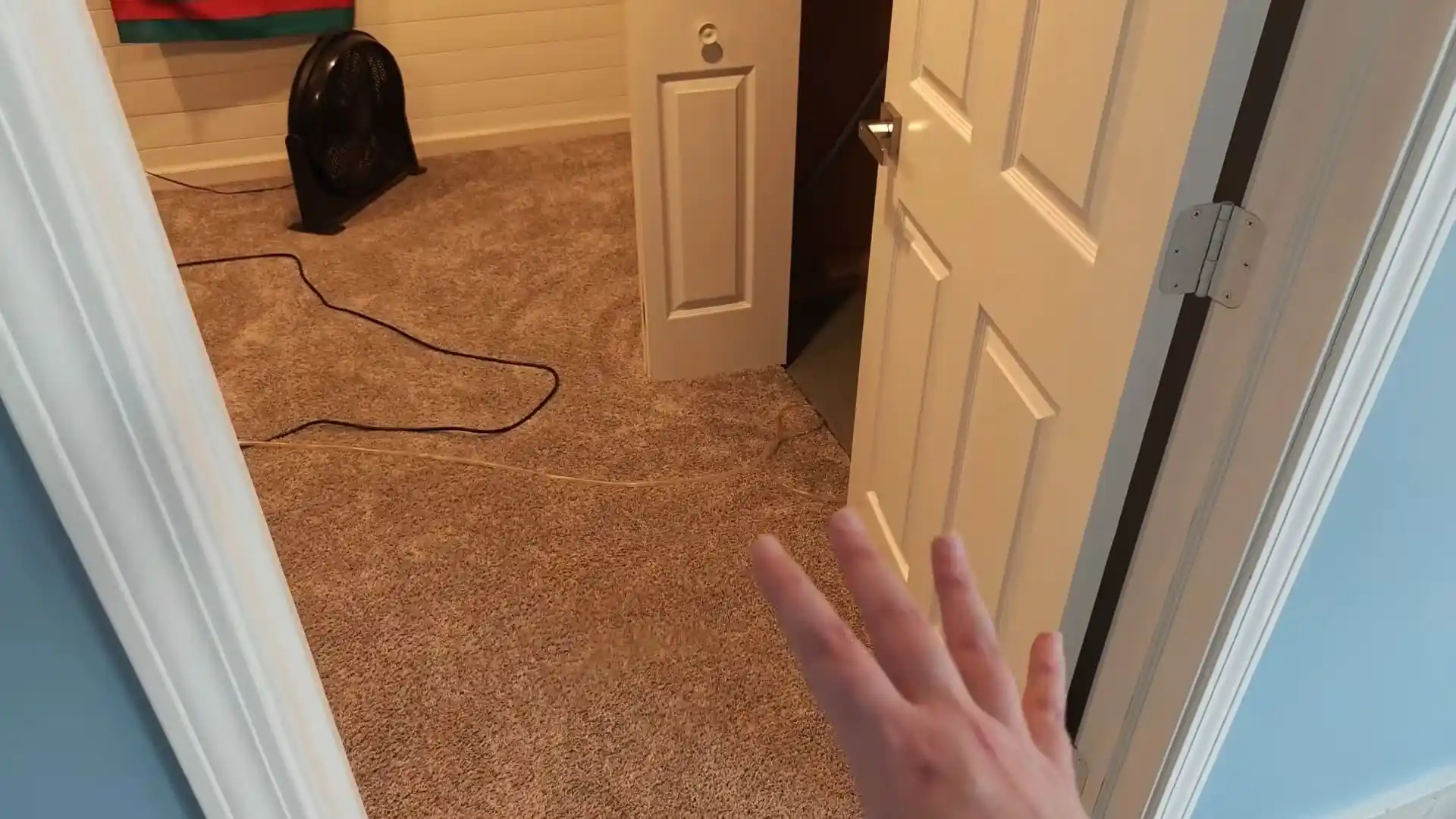
Carpet water extraction using a weighted extraction tool in Montgomery Village, MD
24/7 Emergency ResponseCrews dispatch immediately, any hour
☎ Call Now
🛡️Licensed & Insured Crews
📋Insurance & HOA Documentation
⏱️24/7 Emergency Dispatch
📍Serving Montgomery Village & Montgomery County

The Three Questions That Decide Wet Carpet

First: what was the water? Clean supply-line water leaves carpet fully salvageable in most cases. Groundwater and seepage carry bacteria that complicate the call. Sewage or drain-backup water ends the conversation. Contaminated carpet can't be reliably sanitized and goes, full stop.

Second: how long did it sit? Clean-water carpet extracted within the first day or so has excellent odds. Past 48 hours, microbial growth is underway in the pad and backing regardless of water source, and the odds fall fast. Third: what's underneath? Pad is nearly always replaced.

It's inexpensive, holds water indefinitely, and can't be effectively cleaned in place, while the carpet above it often survives. And the subfloor below both is the piece homeowners forget: wood subfloor that stays wet under “dried” carpet cups, delaminates, and feeds mold from below.

How We Handle A Carpet Job

The process starts with deep extraction, weighted, repeated passes that pull water up through the carpet from the pad, removing multiples of what a rented machine or shop vac recovers.

Then the carpet comes up at the affected edge: pad gets assessed and almost always removed, subfloor gets metered and dried directly, and the carpet itself is either floated (dried in place with air movement underneath) or removed for cleaning depending on condition. Antimicrobial treatment goes down before anything is reinstalled.

Re-stretch and reinstallation happen only after the subfloor hits dry standard on a meter, the same verified-numbers approach as our structural drying work, because carpet relaid over a damp subfloor traps the moisture exactly where mold wants it.

Where the honest answer is replacement, we say so early: fighting to save a marginal carpet costs more in labor than the carpet is worth, and we'd rather tell you that on day one than after three days of trying.

Basements, Berber, And The Village's Usual Suspects

Most of our carpet calls in the Village come from finished basements, the rec rooms and lower-level family spaces common across the community's single-family sections, where wall-to-wall carpet meets every basement water scenario on this site: sump failures, water-heater ruptures, seepage during saturated stretches.

Basement carpet has the hardest survival odds of any in the house, partly because basement water is more often bacteria-carrying groundwater, and partly because concrete slabs release absorbed moisture back up into pad for days after the visible water is gone.

If your basement carpet has been wet more than once, that history changes the math too, repeat-wetted pad and tack strip accumulate microbial load even when each event seemed to dry out fine.

Flooring Material Differences In Water Damage Response

Carpet is only one flooring type affected by water intrusion, and the others fail in distinct ways worth understanding if your loss involves mixed flooring. Engineered hardwood, increasingly common in Montgomery Village renovations, can sometimes survive brief water exposure if dried quickly, but prolonged saturation causes the layered core to delaminate, separate at the seams, in a way solid hardwood generally resists better. Laminate flooring, built around a fiberboard core, is the least water-tolerant common flooring type; once water penetrates the core, swelling is generally permanent and the affected planks require replacement rather than drying.

Carpet delamination, where the carpet's primary and secondary backing separate after prolonged wetness, is one of the failure modes that turns a save-the-carpet situation into a replace-it situation, and it often isn't visible until the carpet is walked on and the backing shifts underfoot. Tack strip mold, growth on the wood strips that anchor carpet edges to the subfloor, is a commonly overlooked inspection point; carpet can be professionally cleaned and dried while the tack strip beneath it quietly grows mold, which is why our carpet assessments specifically check the perimeter, not just the field of the carpet.

Subfloor moisture barriers, installed beneath new flooring after a water event, are worth discussing with your flooring contractor regardless of which flooring type is being reinstalled; a barrier that wasn't there originally can meaningfully reduce vulnerability to the next water event, particularly in basement-level installations where slab moisture is a persistent background risk.

Delamination, Odor, And The Other Ways Carpet Fails Later

Even when wet carpet is dried, two delayed failure modes decide whether the save actually succeeded. Delamination is the first: carpet is two backing layers glued together, and prolonged saturation dissolves that adhesive so the layers separate, showing up weeks later as wrinkles that re-stretching won't fix and a face that shifts underfoot.

Odor is the second: microbial activity that got started in pad or backing before extraction leaves compounds that smell exactly like what they are, and no surface cleaning reaches them.

Both failures trace to the same cause, too much time wet before proper extraction, which is why our save-or-replace call weighs dwell time so heavily, and why a carpet we advise replacing usually earns that verdict from the clock, not the fiber.

Common Questions

Carpet Water Damage FAQ

My carpet feels dry now. Is it actually fine?

Surface-dry means very little. Pad and subfloor hold water for days after the carpet face feels normal. A moisture probe through to the pad answers it in seconds. A musty smell developing over the following week is the classic sign the answer was no.

Can you save the carpet but replace just the pad?

Yes, that's the standard outcome for clean-water losses caught early. Pad is inexpensive and always suspect; carpet is the costly layer and frequently salvageable. Extraction, pad replacement, subfloor drying, antimicrobial treatment, then re-stretch.

Does insurance pay for carpet replacement or just cleaning?

Policies generally cover restoring to pre-loss condition, which means replacement when the carpet genuinely can't be saved, cleaning and drying when it can. Our documentation of water category, dwell time, and salvageability is what supports whichever answer is true.

Related Services

You May Also Need

Water Extraction

View Service →

Flooded Basement Cleanup

See How We Handle This →

Structural Drying

Full Service Details →

Carpet Soaked And Clock Running?

Extraction within hours makes the difference between saving and replacing. Call any time.

☎ Call (240) 207-7823