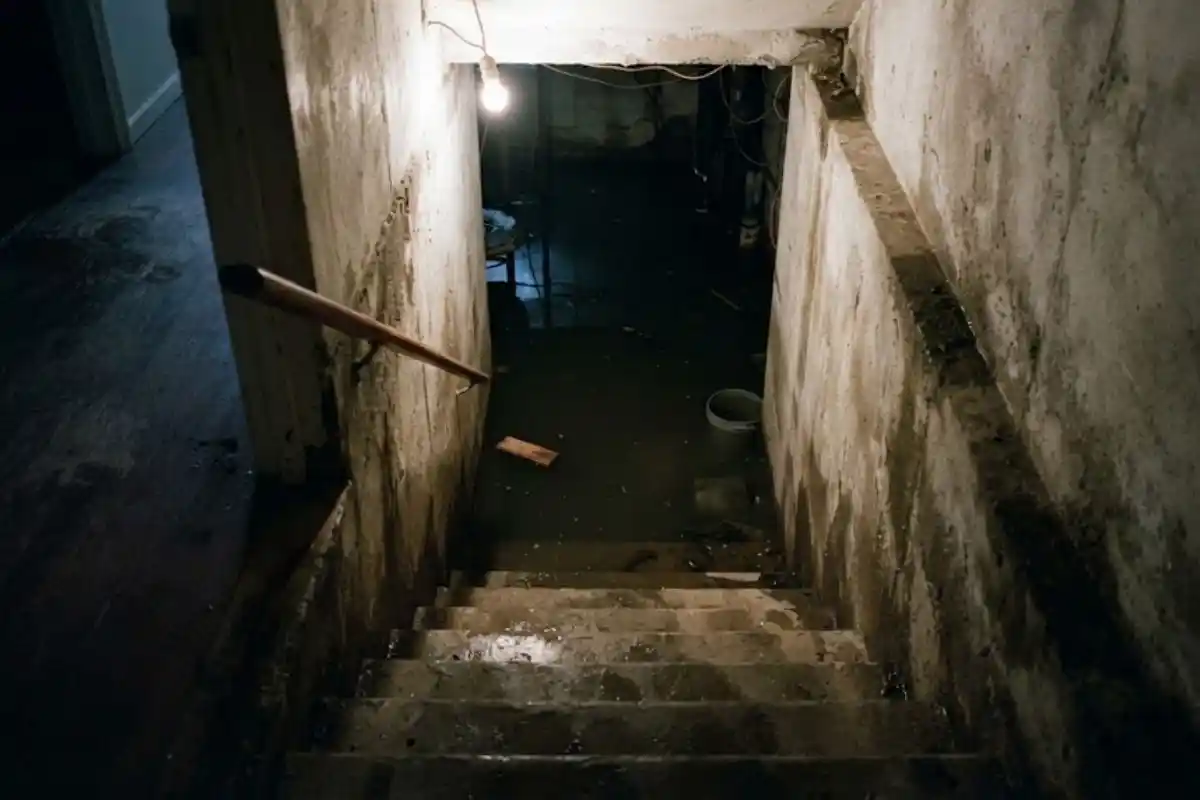
You've just found water in the basement. An inch, a foot, doesn't matter yet. What you do in the next hour shapes the size of this loss more than anything a restoration crew does afterward.
This is the checklist we'd walk you through on the phone, written down: the order matters, the safety steps aren't optional, and a couple of common instincts are worth suppressing.
Step One: Electricity, Before Anything Else
Water and live circuits share your basement, and this step is why the checklist has an order. If the breaker panel is somewhere dry, kill power to the basement circuits before anyone touches the water.
If the panel is in the flooded area. And in many local homes it is. Do not wade to it. Call your utility to cut power at the meter, or an electrician, and stay out of the water until it's done.
No object down there is worth contact with energized water, and outlets, sump plugs, extension cords, and appliance connections are all potentially live below the waterline. Standing water plus uncertain power is a stop-everything condition.
Step Two: Figure Out What The Water Is
Three questions, answerable from the stairs: Is it still rising? Where's it coming from? And is it clean? Rising water from an active plumbing failure means the main shutoff is your next stop, it's typically where the water service enters the house, near the meter.
Water from outside during a storm means shutoff won't help; the job is drainage and extraction. And the cleanliness question sets your safety posture: clear water from a supply line is one thing; gray, odorous water or anything involving a floor drain is contaminated, and skin contact should wait for protective gear.
If there's any sewage component, stop running water anywhere in the house, every upstairs flush and laundry cycle arrives in the basement. Our sewage backup page covers that scenario's full protocol.
Step Three: The Photo That Matters Most
Before anything moves or drains, photograph the water line against something fixed, a stair riser, an outlet plate, the furnace base. That single image anchors the depth of this event for your insurance claim permanently, and it cannot be recreated once pumping starts.
Then photograph the room generally: contents where they sit, the water's extent, anything visibly damaged.
Sixty seconds of photography, taken now, routinely saves weeks of claim friction later. (Whether this event is covered depends on the water's source, and it's the same documentation our water mitigation crews build into every emergency response. But document as if it is, because you decide that question later, not now.)
Step Four: Move What Matters, Skip What Doesn't
With power confirmed off and the water assessed as safe to contact, triage contents by a simple rule: irreplaceable and absorbent first. Documents, photos, electronics near the water, anything sentimental. Up the stairs. Furniture you can lift onto blocks or foil under legs, worth two minutes.
What to skip: the carpet (it's decided already, one way or the other), heavy furniture that risks your back, and anything requiring you to wade deeper than you're confident about. Contents that stay wet another hour are mostly in the same condition either way; you are not.
Step Five: Call While It's Wet
The call to a restoration company belongs inside the first hour, not after the shop-vac experiment. Two reasons. First, extraction capacity: professional equipment removes multiples of what consumer gear recovers, and every gallon extracted mechanically is drying time your basement doesn't serve.
Second, queue position: basement floods cluster. The same storm that flooded yours is flooding your neighbors', and during county-scale events like the flash flooding that hit Montgomery County in July 2025, dispatch queues build by the minute.
Early callers get crews first. Describe the situation completely: depth, source, whether it's rising, power status, square footage. Accurate triage is how the worst situations get priority and everyone gets served fastest.
What Happens After The First Hour
The professional sequence from there: extraction of standing water, assessment with moisture meters (the water you can see is a fraction of the water that matters), removal of what can't be saved, usually carpet pad, sometimes the lower portion of drywall, and then monitored structural drying for the three-to-five days it typically takes a basement to genuinely dry.
The mistakes to avoid in this phase are the quiet ones: ending drying when things feel dry rather than when meters say so, and closing walls or laying new flooring over a slab that's still releasing moisture.
A basement that dried properly is done; a basement that dried approximately is an appointment with our basement mold removal crew in about six weeks.
And once the crisis passes, spend one more hour on the post-mortem: why did this basement flood, and what stops the sequel? Sump upgrades, backup power, grading fixes, and backup-valve installations are all cheaper than the second flood.
The completion report from a good restoration job includes exactly these findings, read that section, not just the invoice.
The Mistakes That Make It Worse
Worth naming the well-intentioned moves that backfire, because we see each weekly. Running the home's HVAC to “help dry things” distributes moisture and any contamination through the duct system.
Aiming box fans at soaked carpet dries the surface while the pad below stays saturated, the illusion of progress that delays the real thing. Ripping out wet materials before photographing destroys claim evidence, and sometimes removes what would have dried in place.
Plugging the sump back in while standing in water skips the electrocution chapter of this checklist.
And waiting until morning, the most common mistake of all, trades queue position and salvage odds for a few hours of pretending it might resolve itself. Basements never resolve themselves. The checklist above takes under an hour; every shortcut through it has a longer version waiting.
Keep This Checklist Somewhere You'll Find It
A basement flood is exactly the kind of event that scrambles clear thinking, so the most useful thing you can do today, before anything is wet, is save this page or print it and tape it near the electrical panel. Future you, standing on wet stairs at 2 a.m., will be glad past you did.
Dealing with this right now in the Montgomery Village area? Our dispatch line is answered 24/7: (240) 207-7823