Most homeowners have never heard the word “puffback” until the day it happens to them, and then they never forget it. A furnace makes a bang, sometimes loud enough to be alarming on its own, and within seconds every room served by the ductwork has a fine, oily black film across every surface.
It's one of the more dramatic events an oil-heated home can experience, and it's more common in this region's older housing stock than most people realize.
What's Actually Happening Inside The Furnace
An oil furnace ignites a fine spray of fuel oil inside a combustion chamber, and normally that ignition happens promptly and burns cleanly.
A puffback occurs when unburned fuel oil accumulates in the chamber before ignition, from a delayed spark, a clogged or misfiring nozzle spraying unevenly, a cracked heat exchanger, or oil left over from a prior shutdown, and then ignites all at once.
That delayed, larger ignition creates a pressure wave inside the sealed combustion chamber and duct system, and the pressure has to go somewhere: it blows backward through the system's return path and out through supply registers, carrying soot with it into every room the ductwork serves.
Why It's A Whole-House Event, Not A Furnace-Room Problem
The defining feature of a puffback, compared to almost any other soot event, is its reach. A fireplace backdraft affects a room; a puffback affects every room with a supply register, because the pressure wave travels the same path the furnace's warm air normally does.
Bedrooms two floors from the mechanical room end up with visible soot on walls, ceilings, and contents. The duct system itself gets coated on the inside, which matters because it means the furnace, even after it's repaired, will continue redistributing residue through the house every time it runs until the ducts are professionally cleaned.
This whole-building reach is why puffback cleanup scopes read more like a house-wide event than a targeted incident, because that's genuinely what happened.
Why Petroleum Soot Is Its Own Category
Puffback residue differs meaningfully from wood-smoke soot: it's petroleum-based, oilier, and more aggressively bonding to surfaces, with a distinct fuel-oil smell that travels with it. That oiliness is exactly why the standard homeowner instinct, wipe it down, backfires here more than with any other soot type.
Wet-wiping oily residue smears it into paint, drywall paper, and fabric almost instantly, converting a cleanable surface deposit into a permanent stain in seconds. The correct approach mirrors our general soot cleanup protocol, dry methods first, HEPA vacuuming and chemical sponges before any wet cleaning, scaled to house-wide coverage.
What To Do In The First Few Minutes
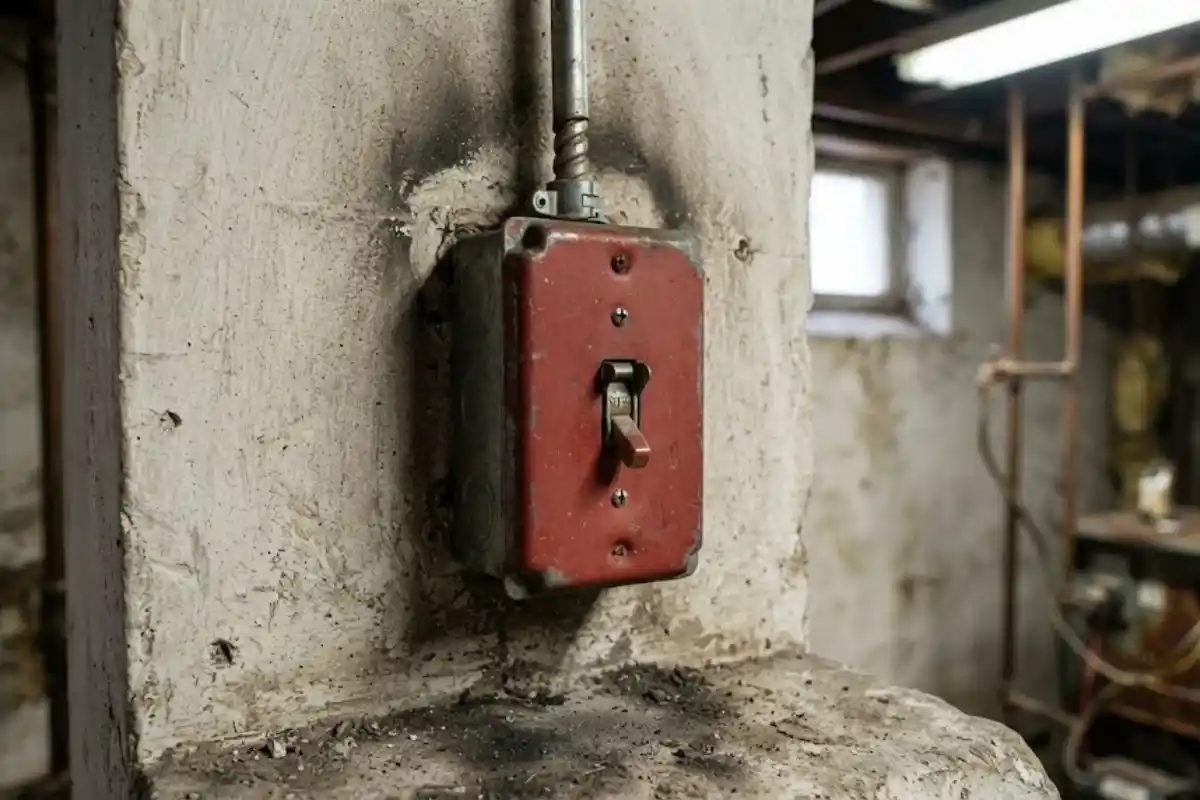
Shut the furnace off at its emergency switch immediately, typically a red switch plate near the top of the basement stairs or mounted close to the unit. And leave it off.
Do not run the HVAC fan for any reason; every cycle redistributes more residue through rooms that may have escaped the worst of the initial event. Don't start cleaning. The wipe-it-down instinct is the exact mistake covered above, and untouched surfaces clean dramatically better than pre-smeared ones.
Ventilate by window if the smell is strong. Photograph representative rooms for documentation before anything is disturbed.
And make two separate calls: a furnace technician to diagnose and repair the cause (nozzle, ignition, heat exchanger), and a restoration company for the whole-home soot cleanup, because cleaning without fixing the furnace risks a repeat event, and fixing the furnace without professional cleanup leaves an oily, smelling house.
The Insurance Side (This Is The Good News)
Puffbacks are typically treated as sudden, accidental discharge events under standard homeowner's policies, a meaningfully different category from gradual maintenance issues, and one that's generally covered. Given that whole-home soot cleanup, duct cleaning, and affected contents add up to real money, that coverage matters.
What strengthens the claim: the furnace technician's documented findings on cause, photos of deposition throughout the home taken before cleaning begins, and an itemized cleanup scope organized by room and contents category. Furnace repair itself is typically treated as a maintenance cost outside the claim, but the cleanup and affected contents are usually the covered portion.
Our puffback cleanup service builds claim documentation alongside the cleanup work for exactly this reason, the two stories, furnace service and cleanup scope, move claims fastest when they arrive together.
Prevention, In One Sentence
Annual furnace service before each heating season is essentially the entire prevention program, nozzle inspection, ignition system check, and heat exchanger evaluation catch nearly every condition that leads to a puffback, and it's a fraction of the cost of cleaning one up.
If your oil furnace hasn't had a pre-season service call in over a year, that's a more useful action item than anything else in this article. And if you've already had a puffback and haven't scheduled the follow-up service since, closing that loop protects the cleanup you just paid for.
How This Compares To A House Fire, Practically
It's worth saying plainly, because it changes how people react: a puffback is dramatic but rarely dangerous in the way a house fire is. There's typically no open flame reaching the living space and no structural burn damage.
The emergency is entirely about soot coverage and odor, not fire suppression or structural safety.
That distinction matters for how quickly a household can safely stay in or return to the home (often the same day, once the furnace is confirmed off and safe, versus the extended displacement a real house fire usually requires) even though the cleanup scope, room for room, can rival a genuine fire event in square footage covered.
Understanding that distinction tends to calm the situation considerably in the first confusing minutes after the bang, and it's usually the first thing worth telling anyone else in the household once the furnace is off and everyone's safe.
One Last Practical Note
If this is your first puffback, know that the whole-home coverage looks more alarming on day one than it usually turns out to be once cleanup is underway. Most homes clean up fully within a matter of days, not weeks, once the furnace is confirmed safe and the crew has a clear room-by-room plan.
Dealing with this right now in the Montgomery Village area? Our dispatch line is answered 24/7: (240) 207-7823