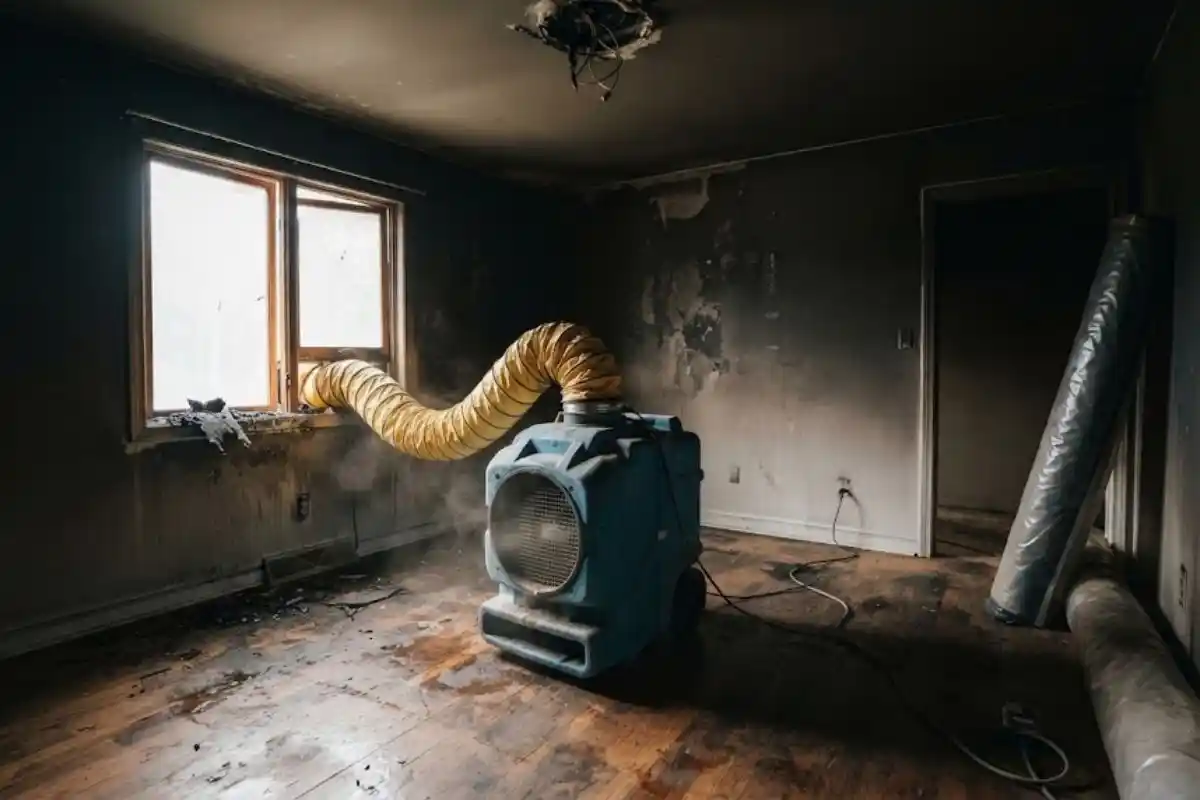
The fire is out, the visible damage is cleaned or being repaired, and the house still smells like it happened yesterday.
Smoke odor is famous for outlasting every other sign of a fire, and the reason is chemistry, not bad luck: smoke molecules embed in places surface cleaning and open windows never reach. Here's why it lingers and what actually makes it stop.
Why Airing Out The House Doesn't Work Long-Term
Open windows and running fans move air, and moving air genuinely does reduce odor concentration. Temporarily.
The problem is the source: smoke particles and volatile compounds have penetrated into porous materials, unsealed wood, drywall cores, insulation, carpet padding, upholstery foam, and those materials continue releasing odor molecules for as long as they hold them, which can be months without treatment. Airing the house dilutes what's currently in the air; it does nothing to the reservoir that keeps refilling it.
This is why a house can smell fine on a dry, breezy day and smell like the fire again the moment it's closed up during a humid stretch. The reservoirs are still there, just temporarily out-competed by ventilation.
The Reservoirs, Ranked By How Much They Hold
Textiles and soft furnishings absorb heavily and release slowly, curtains, upholstery, carpet and pad, bedding. Unsealed or open-grain wood takes in smoke deeply through its pores.
Insulation, once contaminated, is essentially impossible to fully deodorize in place and is usually a removal decision rather than a treatment one. HVAC ductwork holds residue on its interior surfaces and redistributes it through the house every time the system runs, functioning as a whole-home odor reservoir that laundry and painting never touch.
And drywall and framing, especially where smoke concentrated near the fire's origin, hold odor in their core material well behind any surface cleaning or fresh paint.
What Actually Removes It
Professional odor elimination is a sequence rather than a single product. Source removal comes first: materials too saturated with smoke to reasonably treat, ruined insulation, heavily contaminated soft goods.
Get removed rather than deodorized, because no treatment out-competes an active reservoir sitting in the room. Then deep cleaning of remaining surfaces and, critically, the HVAC system's ductwork and coils.
Then air and cavity treatment: thermal fogging recreates smoke's own penetration pattern using a neutralizing agent, reaching the same spaces the smoke did; ozone treatment chemically alters odor molecules through oxidation in an unoccupied space (never breathable at treatment concentration, people, pets, and plants leave first); and hydroxyl generation offers a slower, occupiable alternative where the space can't be vacated.
Finally, stain-and-odor-blocking sealants lock in whatever residual odor remains in framing or subfloor before new finishes go on, so nothing bleeds back through fresh paint weeks later.
The Repaint Mistake
Repainting over smoke odor without treating the source first is the single most common failed attempt we see. Standard paint isn't an odor barrier, the molecules embedded in the drywall and framing behind it continue off-gassing directly through ordinary finish coats, and the smell returns within weeks, often to the homeowner's genuine confusion since the walls look and smell fine on move-out day.
The fix order matters: source treatment (fogging, ozone, or hydroxyl as appropriate) before any odor-blocking primer, and odor-blocking primer before the finish coat.
Skipping the middle step is exactly how this job gets done twice. If you're planning to repaint after a fire regardless, treating the odor first is the cheapest insurance available against redoing the paint job in a few months.
Verifying It's Actually Gone
The credibility problem with odor treatment is that a freshly treated space smells like the treatment, not like nothing. And that temporary absence can mask a reservoir that survived.
Real verification happens after the space rests: sealed up, ideally in warm or humid conditions (the exact circumstances that make odor reappear), and re-checked before calling the job finished. If a reservoir remains, this test finds it while the crew and equipment are still available, rather than after move-back day when a lingering smell becomes a much more frustrating callback.
Our fire and smoke odor removal service builds this rest-and-recheck step into every job specifically because of how often surface-level treatments fail this exact test.
If you're dealing with lingering smoke smell from your own fire, a neighbor's fire that migrated through shared walls, or a much older event a home inspection just uncovered, the treatment logic is identical, find every reservoir, treat or remove it, verify under realistic conditions.
A house that smells like nothing is achievable; a house that just smells recently cleaned usually isn't done.
Small Events Deserve The Same Logic, Smaller Scale
Not every smoke odor situation is a full house fire. A contained stovetop flare-up, a small electrical smolder, or smoke drifting in from a neighboring unit can all leave real, lingering odor without a large-scale loss, and the same source-first logic applies at whatever scale the event calls for.
A single room's worth of thermal fogging and a duct check is a much smaller job than a whole-house treatment, but it's still a job, not a candle-and-hope situation.
If your event was small and the smell still hasn't cleared after normal cleaning and a week of ventilation, that's the signal the reservoir is larger than the visible event suggested, and it's worth a look before repainting locks the smell in for good, since paint over an untreated small event fails the same way paint over a large one does, just on a smaller wall, and the repaint-and-fail cycle wastes exactly the same amount of your weekend regardless of scale, the only variable that actually shrinks with a smaller event is how much material there is to treat, not how carefully the sequence needs to be followed.
Related reading: our soot cleanup guide covers the surface-residue side of small fire events in more detail, and our smoke damage restoration page covers the full-structure version of this same problem.
Dealing with this right now in the Montgomery Village area? Our dispatch line is answered 24/7: (240) 207-7823