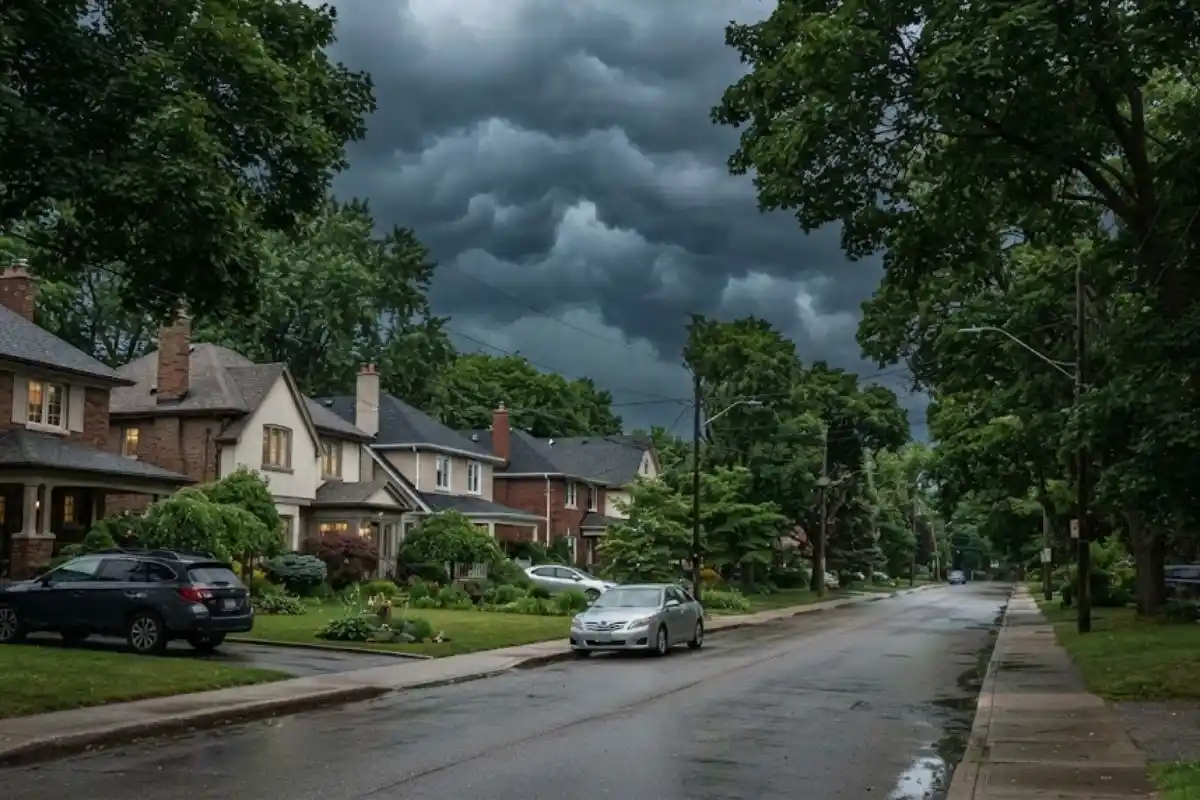
In June 2024, a tornado tracked directly through the Montgomery Village, Gaithersburg, Germantown, North Potomac, and Boyds corridor, dropping a tree into a home on Dogwood Drive in Gaithersburg and trapping five people who needed rescue.
It's the clearest local reminder that severe weather here isn't a hypothetical for the disaster-movie channel, it's a real risk to specific streets many of our neighbors live on. This checklist is built around what that storm and the county's recurring flash-flood pattern actually damaged, not generic disaster-prep advice copied from elsewhere.
Before Storm Season: The Trees
Montgomery Village and the surrounding communities' mature tree canopy is one of the area's best features and, honestly, one of its bigger storm liabilities, trees planted with the original construction decades ago are now large, established, and standing close to houses throughout the older sections.
A pre-season walk of your property line, looking specifically for leaning trees, cracked major limbs, and dead wood positioned over the roofline, catches the highest-consequence risks before wind finds them.
This isn't a call to remove healthy mature trees; it's a call to have a genuinely concerning one assessed by an arborist before a storm makes the assessment for you. The Dogwood Drive incident began with exactly this kind of tree, in exactly this kind of neighborhood.
Before Storm Season: The Building Envelope
Storm damage most often enters through small envelope failures rather than dramatic structural ones.
A pre-season check: scan the roofline for lifted, cracked, or missing shingles and check for granule accumulation at downspout exits (a sign of wear); inspect siding seams, especially on the side of the house that typically catches wind-driven rain, since damaged siding is one of the most common, and most commonly misdiagnosed, sources of interior water intrusion during storms; confirm gutters and downspouts are clear and directing water away from the foundation, since clogged systems during heavy rain push water toward exactly the entry points a storm creates; and check attic ventilation and any roof penetrations (vents, chimneys, skylights) for degraded flashing or sealant.
None of this requires a contractor for the inspection itself, a pair of binoculars and twenty minutes covers most of it.
Before Storm Season: The Water Systems
Storms and flooding go together in this county, and the systems that fight flooding deserve the same pre-season attention as the roof.
Test your sump pump under load, pour water into the pit and confirm the float, motor, and discharge all work as a system, not just that the pump makes noise (our basement water removal team can walk you through the specific warning signs if you're not sure what to look for).
Confirm you have battery or water-powered backup for the sump; power outages and storms arrive together constantly, and a sump without backup power is a sump that fails exactly when it's needed most. Know your main water shutoff location, separate from the sump question.
Useful for plumbing emergencies a storm can also trigger. And if your basement has any flooding history, this is the season to address the underlying cause rather than betting on the next storm being gentler.
During The Storm
Stay away from windows during high wind, and away from any room with a large tree limb positioned overhead. Avoid electrical equipment and corded devices during lightning.
If water begins entering, don't wait for the storm to end before starting to manage it, move contents up and away from likely entry points immediately; the difference between managing water at first sight and returning to find it after the storm passed is often the difference between a mop-up and a claim.
Monitor county emergency alerts, particularly for flash flood warnings, which in this county's terrain can escalate from advisory to genuinely dangerous within an hour, the profile behind the county's worst flooding events.
After The Storm: A Systematic Walk-Through
Once conditions are safe, work through the property methodically rather than just glancing around. Exterior: roofline for new damage, siding for cracks or displaced panels, downed limbs and their proximity to structures, and any standing water pooling against the foundation.
Interior: every ceiling, starting with top-floor rooms and closets specifically.
Stains show up in closets first because nobody's looking, which is exactly the pattern our ceiling water damage repair team traces on every call; attic, if accessible, checked for wet insulation or active dripping; and basements for any new moisture regardless of whether the storm's rain total seemed modest, since wind-driven intrusion doesn't require historic rainfall to find a gap.
Photograph anything questionable with a timestamp, even damage you're not sure warrants a claim. The documentation costs nothing today and may matter considerably later, especially if a small issue develops into something larger before you notice it again.
When To Call Immediately Vs. When To Monitor
Call immediately for: any active water entry, a downed line or visible structural compromise, a tree resting against the house even without visible penetration, or any ceiling bulge or new soft spot.
Monitor and reassess within a day or two for: minor cosmetic siding damage with no interior signs, a few displaced shingles with no active leak, or landscaping damage without structural implications.
When in doubt, the assessment costs far less than the alternative of guessing wrong, our storm damage restoration team handles everything from emergency tarping through full structural and interior repair, and an honest evaluation of “is this urgent” is part of every call we take, whether or not it turns into a job.
Building A Simple Storm Kit For This Purpose
Beyond structural preparedness, a small kit specific to water-entry response speeds up the “during the storm” response above: a headlamp or flashlight (power outages and storms travel together), a few heavy towels and a mop bucket staged somewhere accessible rather than buried in a closet, plastic sheeting or tarps for covering contents quickly if a leak starts, and your restoration company's number saved in your phone rather than searched for mid-emergency.
None of this replaces professional response for anything beyond minor water entry, but it buys the crucial first twenty minutes before help arrives, often the difference between managing a small leak and returning from the basement to find it's become a bigger one.
Dealing with this right now in the Montgomery Village area? Our dispatch line is answered 24/7: (240) 207-7823