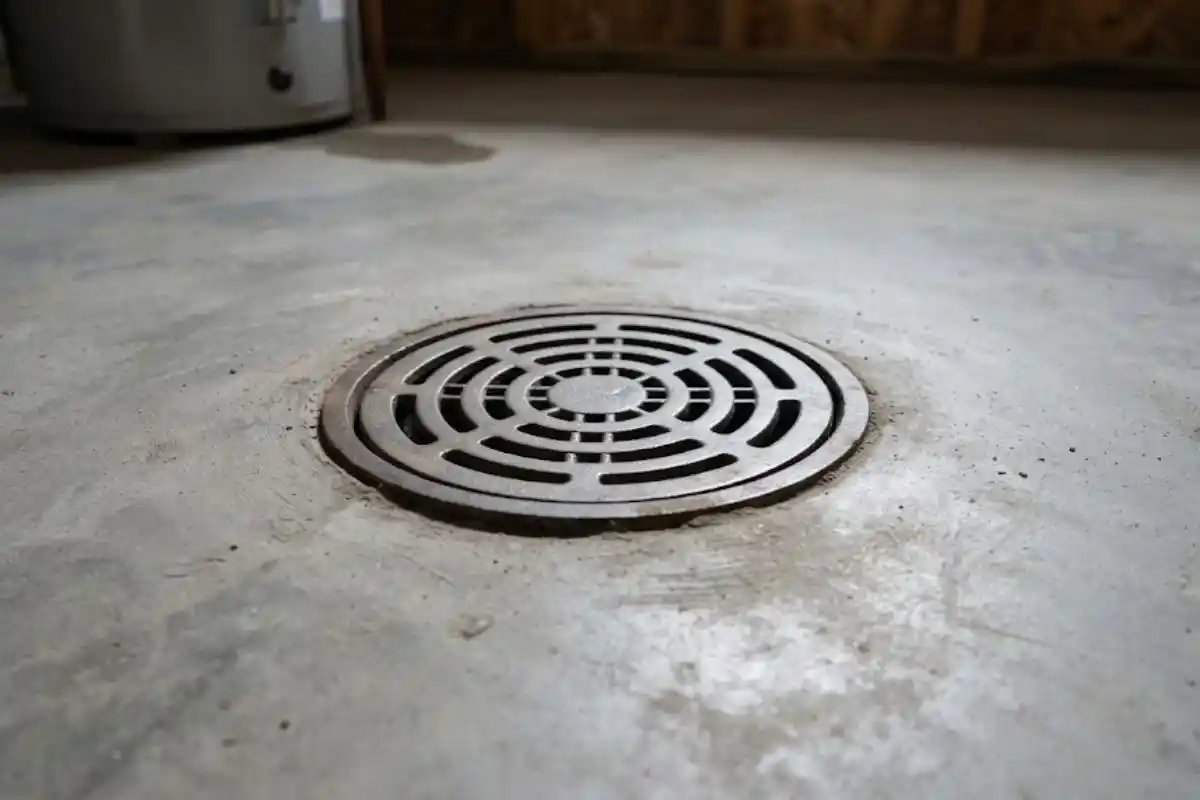
A basement floor drain starts bubbling. A lower-level toilet rises instead of flushing. What's happening is simple and urgent: the line between your house and the sewer is blocked or overwhelmed, and everything trying to leave the house is coming back in.
Sewage backups are the one water emergency where the first response is about what you stop doing. And where the half-measures that feel productive are the ones that spread contamination through your home. Here's the first half hour, straight.
Minute One: Stop Feeding The Backup
Every drop of water used anywhere in the house is now arriving in your basement. The first move costs nothing and does the most: total water discipline.
No flushing, no laundry, no dishwasher, no showers, no running taps, announce it to the household like the rule it is. A backup that stays fixture-sized because the house went quiet is a fundamentally different cleanup than one fed by an evening's normal water use.
And resist the plunger: plunging a fixture during an active line backup accomplishes nothing against a lateral blockage and can redirect contaminated water to other fixtures.
Minutes Two Through Five: Draw The Safety Lines
Backup water is what the industry calls Category 3, the same classification as raw sewage, because that's what it is, carrying bacteria, viruses, and parasites that make casual contact genuinely unwise.
The boundaries: people and pets out of the affected area, full stop; children and anyone immunocompromised or respiratory-sensitive stay out of the basement entirely until professional cleanup is verified complete. Power off to the affected area at the breaker if outlets, cords, or appliances are near the water.
And if the panel itself is in the wet zone, that's a call to the utility, not a wade. Don't run the HVAC if returns or equipment sit in the affected space; a duct system is an efficient way to distribute what you least want distributed.
And skip the rescue mission for contents standing in the water. Porous items that have absorbed backup water are largely decided already, and skin contact isn't a fair trade for a cardboard box.
Minutes Five Through Fifteen: Document And Diagnose
From dry ground, photograph: the water's extent against a fixed reference, the affected contents in place, the fixture or drain it's rising from. Then gather the story the professionals will need, when it started, what was running in the house, whether it's still rising, whether heavy rain is involved.
That last question matters diagnostically: backups during intense storms can be municipal-system surcharge pushing back up private laterals (meaning your plumbing may be fine), while clear-weather backups point at the lateral itself, roots, a pipe belly, or accumulation finally closing the pipe.
Montgomery County's older neighborhoods run on laterals that have had decades to develop all three, and the county's flash-flood-scale rain events supply the surcharge scenario a few times a year.
Minutes Fifteen Through Thirty: Make The Calls
Two calls, and the order depends on flow. If sewage is actively rising, a drain contractor for emergency line clearing comes first. Cleanup can't outrun an open faucet of contamination.
If it's stopped rising with the house quiet, the restoration call leads: containment and extraction start while line service is scheduled, and we coordinate that sequencing routinely, including the camera inspection during clearing that tells you whether this was a one-time event or the first installment.
What not to call: the shop-vac. Consumer equipment isn't rated for Category 3 water, contaminates itself permanently, and exhausts aerosolized contamination into the air at face height. This is the one cleanup category where DIY isn't thrifty, it's an exposure event.
Our sewage backup cleanup protocol covers what the professional version involves: containment, extraction, removal of what can't be sanitized, antimicrobial disinfection, and verified drying.
Why The Clock Matters More Here Than Any Other Water Event
Clean-water urgency is about preventing mold on a 24–48 hour timeline.
Sewage urgency is faster and different: contaminated moisture is actively wicking into materials from minute one, and every hour extends the contamination boundary, the backup confined to a bathroom at hour one involves hallway subfloor by morning, and porous materials that might have been saved at the two-hour mark are disposal items by the twelve-hour mark.
The affected zone roughly doubles overnight. This is why sewage calls get emergency dispatch at 2 a.m. rather than a morning appointment, and why the earliest call reliably produces the smallest scope, the shortest job, and the lowest bill.
One piece of homework for the calm day after (or better, before): check your policy's declarations page for water backup coverage. Standard homeowners policies exclude sewer and drain backups by default; the endorsement that covers them is inexpensive and has to be specifically elected.
Our sewage backup cleanup team sees exactly what's at stake when that endorsement is missing. But this one endorsement, checked today, is the difference between a covered cleanup and an out-of-pocket one when a lateral finally has its moment.
After The Cleanup: Closing The Loop
Once the emergency passes, two follow-ups convert this event into prevention. First, the camera inspection during line clearing, insist on it. It tells you definitively whether this was storm surcharge through healthy pipe (bad luck, endorsement claim, done) or a lateral with roots, a belly, or scale (a countdown to the sequel, now visible and plannable).
Second, verified drying of everything the backup touched: contaminated events that get disinfected but not properly dried trade a sanitation problem for a mold problem, and our structural drying protocols close that door with meter-verified numbers rather than optimism. A backup handled completely, contained, cleaned, dried, diagnosed, is a bad week.
A backup handled partially is a bad week with installments. The difference between the two versions is rarely money and almost always thoroughness: the camera you didn't skip, the drying you let finish, and the endorsement you checked before any of it happened.
Dealing with this right now in the Montgomery Village area? Our dispatch line is answered 24/7: (240) 207-7823