Maryland winters are hard on plumbing in a specific way: not sustained deep cold, but repeated crossings of the freeze line, cold snaps followed by thaws, over and over, all season.
That freeze-thaw cycling is why our burst-pipe calls spike not during the cold snap but on the warm day after it, and why the pipes that fail are predictable ones. This is the prevention list we'd give any homeowner in our coverage area, plus the protocol for the pipe that freezes despite it.
Why Pipes Burst On The Thaw
The physics surprises people. Water expands as it freezes, and that expansion can split a pipe, but the flood usually doesn't happen then, because the ice plug itself seals the split.
The dangerous moment is the thaw: the plug releases, mains pressure returns to a compromised line, and water exits through the split at full flow.
A pipe that “made it through” the cold snap may already be split and simply waiting for its ice to melt, which is why any sign of moisture as temperatures rise deserves immediate attention, and why the shutoff-valve knowledge covered below matters most on warming days.
The Pipes That Freeze First
Every house has a vulnerability map, and it's shorter than the whole plumbing system. Pipes in exterior walls, especially kitchen and bathroom supplies on the windward side, sit closest to outdoor temperatures with the least insulation benefit.
Garage ceilings and the cantilevered floors over open air (a common feature in this area's 1970s-90s housing stock) carry plumbing through spaces that barely count as indoors. Basement and crawlspace runs near vents, band joists, and foundation gaps catch drafts the living space never feels.
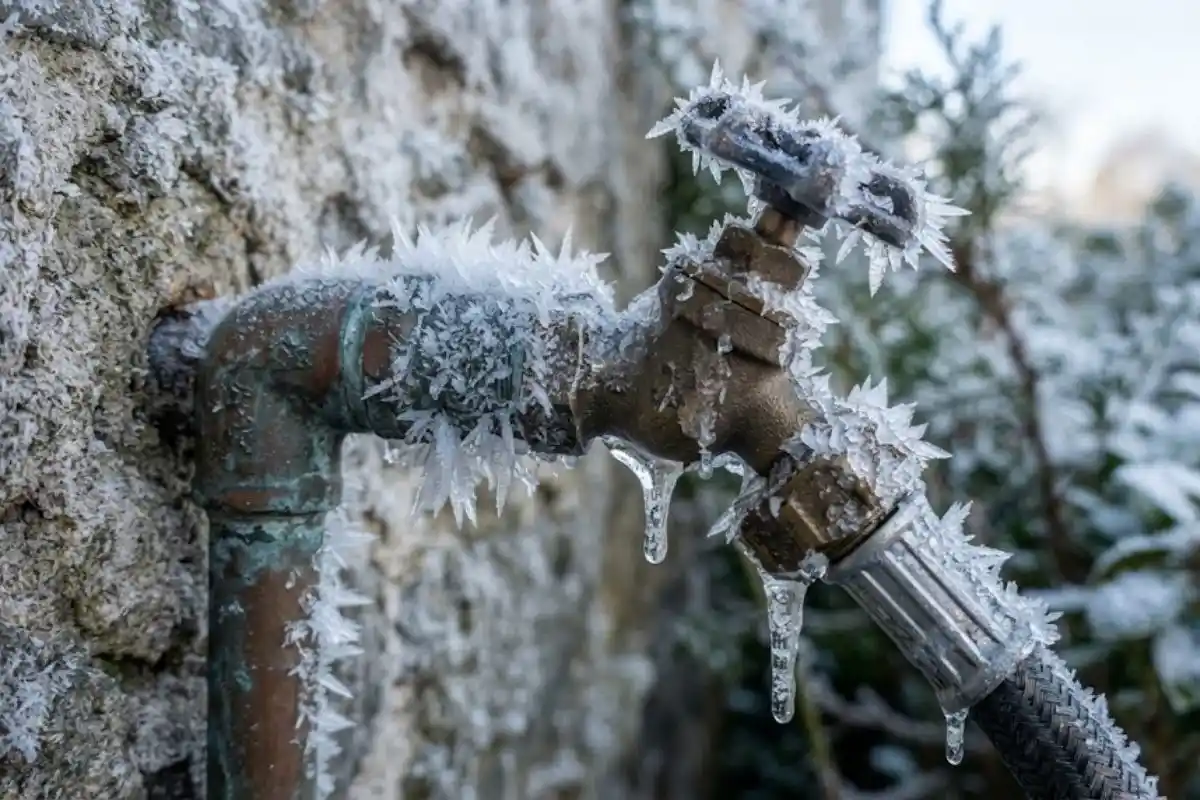
Exterior spigots with hoses still attached trap water exactly where it freezes first. And in Montgomery Village's townhome clusters, end units carry more exterior wall, and more freeze exposure. Than their interior neighbors, a difference that shows up plainly in our winter dispatch pattern.
The Prevention List, In Order Of Yield
Before the season: disconnect hoses and shut interior valves to exterior spigots; insulate the vulnerable runs from the map above with foam sleeves (an hour of work, single-digit dollars per pipe); seal the drafts, gaps at the band joist, around penetrations, at crawlspace vents, that aim cold air at plumbing; and replace rubber washing-machine hoses with braided stainless, a burst source at any temperature that winter pressure cycling only worsens.
During cold snaps: let vulnerable faucets drip, moving water resists freezing, and the pennies of water cost are the cheapest insurance available; open cabinet doors under sinks on exterior walls so room heat reaches the plumbing; keep the house heated even when traveling (55°F minimum.
The vacation-setback burst is a classic January call); and if you travel for extended periods, consider shutting the main and draining the system entirely, which reduces the burst question to zero.
All year: know your main shutoff valve's location and confirm it actually turns. Older gate valves seize in place, and discovering that during an active burst converts a two-minute emergency into a twenty-minute one, with the loss scaling accordingly.
Our burst pipe response page calls this the most valuable five minutes of preparation a homeowner can spend, and January is when that math proves itself.
The Frozen Pipe Protocol
You turn a faucet and get nothing, or a trickle. A line has frozen somewhere between the main and that fixture.
The protocol: leave the affected faucet open (relieving pressure as ice melts, and showing you when flow returns); shut off water to that run if you can isolate it, or note the main's location if you can't; and thaw gradually from the faucet end toward the frozen section, warm air from a hair dryer or space heater, warm towels, ambient heat with cabinet doors open.
Never open flame, which damages pipes and starts the fires that make our other service line necessary.
As the line thaws, watch and listen for moisture anywhere along the run, dampness, dripping, a hiss, because that's the split announcing itself, and the main goes off immediately if it does.
When The Burst Happens Anyway
Prevention shrinks the odds; it doesn't retire them. When a line lets go, the sequence is: main shutoff immediately (minutes translate directly to gallons, a residential supply line delivers bathtubs per hour, not cups); power off to affected areas if water is near anything electrical; and the restoration call while the floor is still wet, because extraction speed decides how far this loss travels into walls, flooring, and the ceiling below.
From there it's a standard water loss run properly, extraction, moisture mapping, monitored drying.
And the January version comes with one seasonal note: cold-weather losses dry slower in unheated spaces, so drying plans account for keeping affected areas warm enough for the equipment to work.
If a winter burst finds you, our extraction and drying crews run all season, around the clock, including the holiday weeks when a surprising share of these calls arrive.
The End-Unit And Empty-House Addendum
Two situations deserve their own paragraph. Townhome end units, abundant across Montgomery Village and Germantown's clusters, carry twice the exterior wall of interior units, and their kitchen and bath runs on those walls are the corridor's most reliable freeze casualties; if you're in an end unit, the prevention list above applies to you at double weight.
And vacant houses, between tenants, listed for sale, or in probate, produce the season's worst losses, because nobody hears the burst: a supply line can run for days into an empty structure, and we've extracted the results.
Vacant-property owners should winterize properly (drained lines, shut main) or arrange genuine weekly checks, a neighbor walking through beats a thermostat app, because apps report temperature, not water on the floor.
One Reminder Before The Next Cold Snap
None of this takes more than an afternoon, and most of it takes far less. If you do nothing else from this list, find your main shutoff valve this week. Everything else on this page is prevention; that one is damage control, and it's the cheapest insurance in the house.
Dealing with this right now in the Montgomery Village area? Our dispatch line is answered 24/7: (240) 207-7823