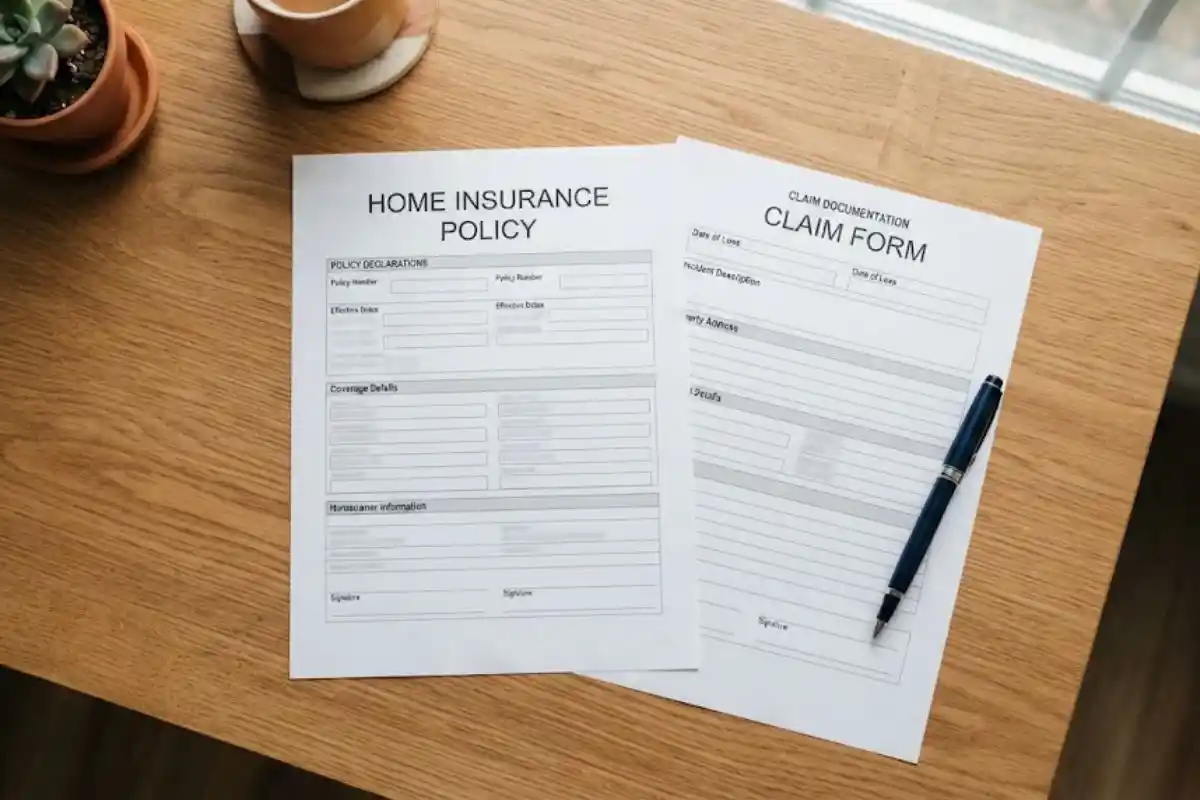
The most common insurance question we hear on water damage calls has a genuinely useful answer, but it's not yes or no.
It's “where did the water come from?” Maryland homeowners policies sort water damage by source and suddenness, and three categories decide nearly every claim: sudden internal water, gradual water, and rising water. Learn the three and you can predict most coverage outcomes before the adjuster does.
Category One: Sudden And Accidental, Usually Covered
The burst supply line, the failed water heater, the washing machine hose that lets go, the upstairs tub overflow, standard homeowners policies generally cover sudden, accidental discharge of water from plumbing and appliances.
That coverage typically includes the resulting damage: the soaked drywall, ruined flooring, damaged contents, and the mitigation and drying required to stop the loss from growing. Notably, policies don't just permit prompt mitigation. They require it. Reasonable emergency steps to prevent further damage are a policyholder duty, and unexplained delay can complicate an otherwise clean claim.
One nuance: the damaged pipe or appliance itself is usually your cost. Insurance pays for what the water did, not the plumbing repair, a distinction that surprises people on smaller claims.
Category Two: Gradual Damage, Usually Not Covered
The slow leak under the sink that's been staining the cabinet floor for months. The chronic seepage at the basement wall. The roof that's been letting a little water in every storm for two years.
Policies broadly exclude damage that develops gradually, on the logic that maintenance is the homeowner's job and insurance covers accidents, not deferred upkeep.
The line between sudden and gradual gets contested in exactly one place: the hidden leak. A pipe that failed suddenly inside a wall but wasn't discovered for weeks lives in the gray zone, and outcomes vary by policy language and documentation.
This is where professional moisture mapping earns its keep, the evidence of how water traveled and how long materials have been wet supports the honest version of events, whichever version that is.
It's also a standing argument for investigating small stains early: the same ceiling mark is a covered sudden-discharge claim caught this month and a contested gradual-damage claim caught next spring. Our ceiling water damage work sits on this boundary constantly.
Category Three: Rising Water, A Different Policy Entirely
Water that enters from outside at ground level or below, storm runoff, overflowing streams, groundwater forcing through the foundation, is flood damage, and standard homeowners policies exclude it almost universally.
Flood coverage is a separate policy, typically through the National Flood Insurance Program or private flood insurers, and the distinction is absolute enough that the same wet basement can be fully covered or fully excluded depending on which direction the water came from.
This matters locally right now: FEMA is updating Montgomery County's Flood Insurance Rate Maps, with new maps expected in spring 2026, and map updates change flood zone designations, which change both insurance requirements (lenders require flood coverage in high-risk zones) and premiums.
If you're near any of the county's stream valleys or, closer to home, Montgomery Village's pond and lake features, a ten-minute conversation with your insurance agent about your current and projected zone designation is genuinely worthwhile this year.
The county's flash-flood history, from the deadly 2021 Rockville flooding to the July 2025 event that generated over 100 rescue calls in two hours, is the argument that these maps describe real risk, not paperwork.
The Endorsement Most Homeowners Haven't Checked
Between the covered and excluded categories sits the one most worth five minutes of your attention: water backup coverage. Sewage or drain water backing up into the house, the basement floor drain scenario, is excluded from standard policies by default but coverable through an inexpensive endorsement that has to be specifically elected.
In a county whose older neighborhoods run on aging laterals, and whose storm events can surcharge municipal systems into private drains, this endorsement earns its premium more reliably than almost any coverage a homeowner can buy.
Check your declarations page for “water backup” or “sewer backup” language; if it's not there, the conversation with your agent costs nothing. Our sewage backup cleanup page covers what happens when this coverage gets used.
Making Any Water Claim Go Better
Whatever category your water event lands in, the same practices move claims forward: photograph everything before cleanup starts, including a water-line shot against a fixed reference; mitigate promptly and keep receipts.
The duty to prevent further damage is real and the costs are typically claimable; document the source specifically, because source is what the whole coverage question turns on; and get moisture readings on record, since they establish extent and timeline in a way photographs alone can't.
Restoration documentation built for adjusters, written scopes, room-by-room readings, dated photo sets, is half of what a professional response actually provides; the pumps are the visible half.
And the honest disclaimer: policies vary, endorsements vary, and nothing here substitutes for reading yours or asking your agent. What doesn't vary is the three-category logic, sudden, gradual, rising. And knowing it puts you ahead of most claims before they start.
A Checklist For This Weekend
To turn this article into fifteen useful minutes: pull your declarations page and find three things. First, the water backup endorsement, present or absent, and if absent, priced (it's usually modest).
Second, your deductible against the realistic size of a water loss in your home; a finished basement argues for understanding that number before you need it. Third, your flood zone status, and with Montgomery County's FEMA map update expected in spring 2026, ask your agent specifically whether the new maps touch your address.
None of this requires an insurance education; it requires one document and one phone call. The homeowners who navigate water claims well aren't the lucky ones, they're the ones who knew their coverage's shape before the water tested it.
If you take nothing else from this article, take the five-minute version: read your declarations page today, while it's just paperwork, rather than during an emergency when every minute matters more.
Dealing with this right now in the Montgomery Village area? Our dispatch line is answered 24/7: (240) 207-7823